
A Symphony of Sacrifice: Delta Force Chapter 5 'Valor'
Chapter 5 'Valor' vividly portrays the Black Hawk helicopter mission and the unwavering courage of soldiers in a chaotic war zone.
I remember the dust. Not as a memory, but as a taste, a gritty film on my tongue that no amount of swallowing could clear. It was the taste of the decision Lieutenant McKnight had to make, a choice that echoed in the static-filled silence after the chaos of 'Lost Convoy'. The battered convoy, a wounded beast bleeding men and machinery, had to turn back. The mission to reach the downed Super Six-One was a dream deferred, a promise broken by the hard arithmetic of survival. In its place, Colonel Harrel's voice crackled with a new directive: send in the Black Hawks. As Sergeant Eversmann waited, a solitary sentinel in a sea of hostility, we took to the sky in Super Six-Two and Six-Four. We were the new promise, the airborne answer to a desperate prayer. This is my memory of Chapter 5, 'Valor'—a memory not of victory, but of a covenant written in smoke and fire.
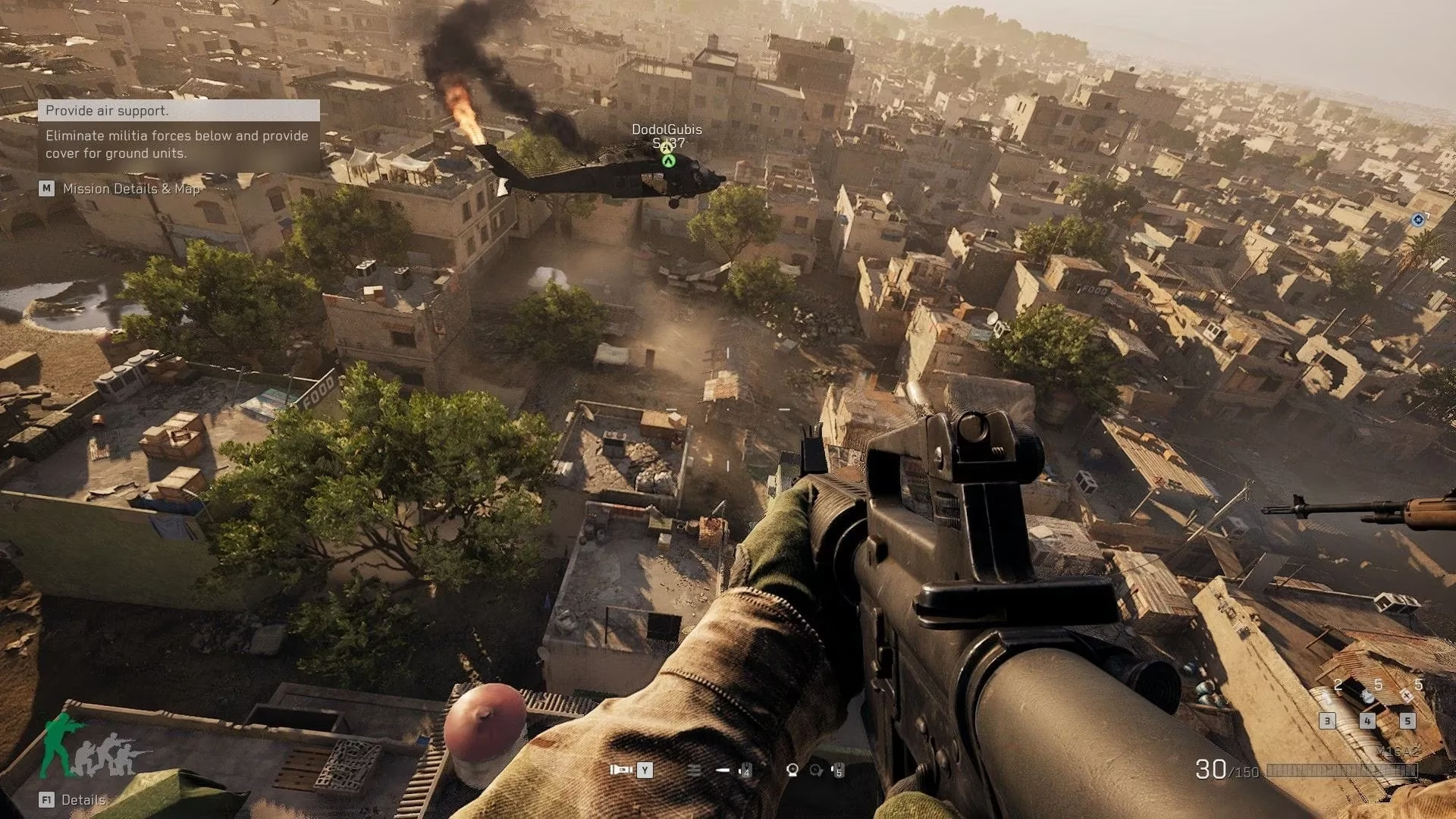
The mission began with a deceptive calm, a ballet of steel birds against a canvas of crumbling rooftops. My world was split between two realities: the intimate focus of my rifle's scope and the god-like, thundering purview of the Black Hawk's minigun. For two of my squadmates, their reality was the latter—a symphony of spinning barrels and spent casings, raining justice on the militia swarming the roofs below like ants on a disturbed hill. The rest of us conserved our ammunition, each bullet a precious seed to be planted later, knowing this serene overwatch was as fragile as a soap bubble. And like a bubble, it popped. The RPG strike wasn't just an explosion; it was the universe inhaling sharply. One moment, the minigun's roar was the heartbeat of our mission; the next, it was replaced by the deafening silence of a fireball, a dying star plummeting to earth. Super Six-Two was gone, and with it, half my soul. Our bird, Six-Four, descended not as a conqueror, but as a mourner, setting my remaining brother and me down in the hellscape below.
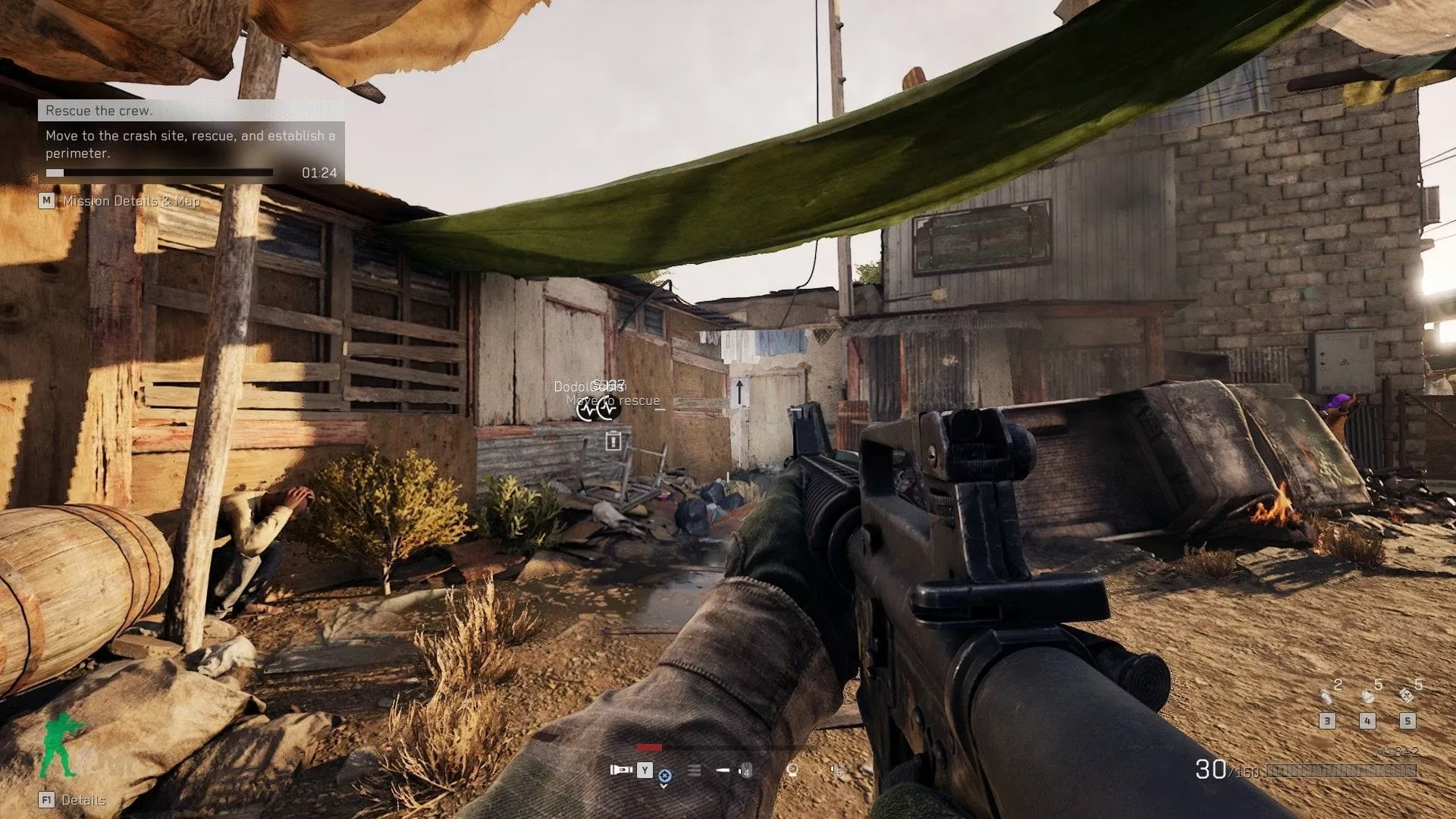
The ground welcomed us with heat and hostility. The revival timers for our downed comrades were already bleeding out, digital ghosts fading on my HUD. There was no time for tactics, only for a desperate, lung-burning sprint. The path was a straight line through the dust, a pilgrim's road to a smoldering shrine. Every second of that 90-count timer was a grain of sand slipping through a clenched fist. We found them in the wreckage, the Black Hawk's carcass like a great metal whale beached in a stone desert, its ribs splayed open to reveal a small, dark hollow—a room carved by catastrophe.
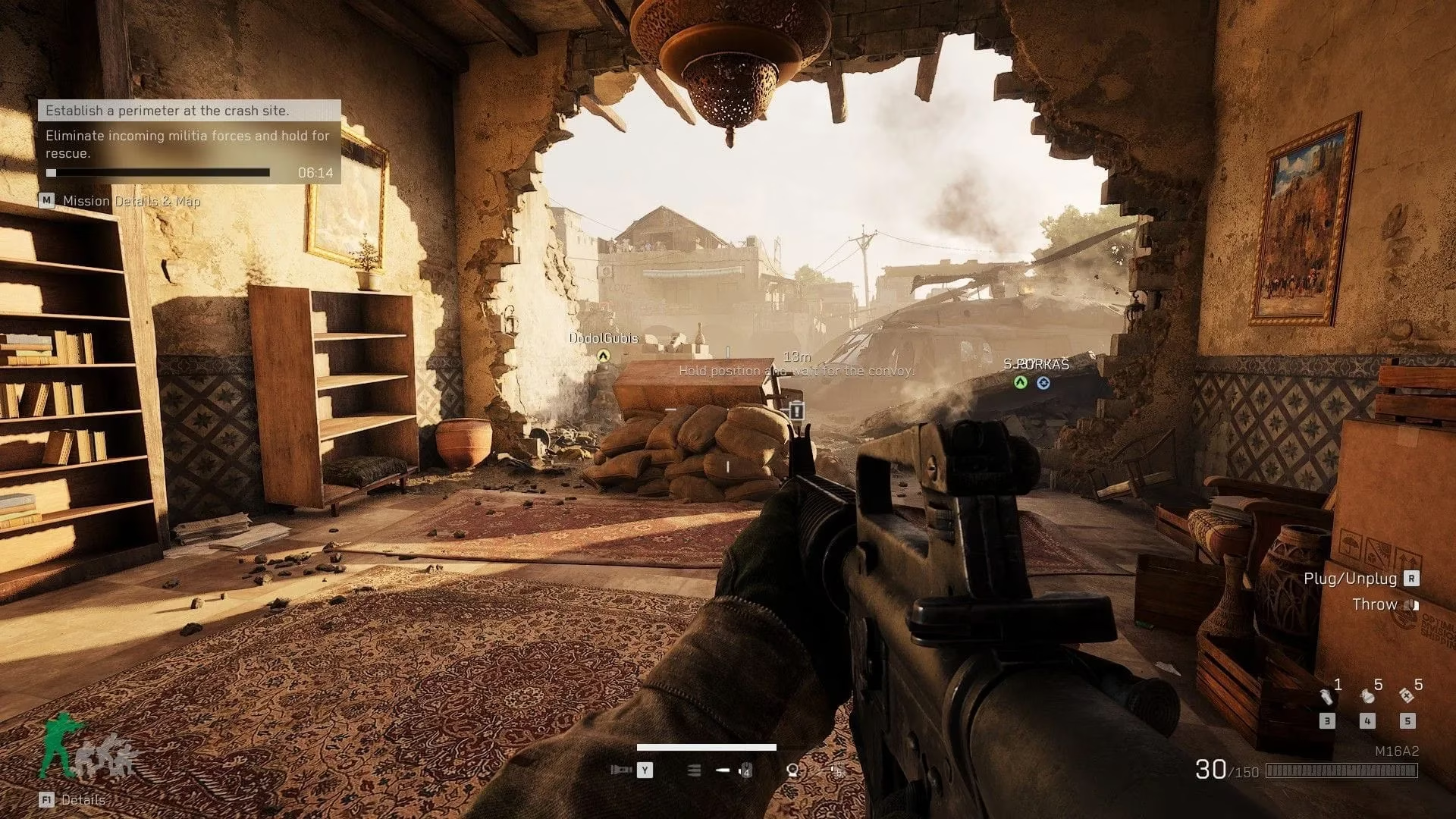
This hollow became our universe. We revived our brothers under a canopy of smoke grenades and dragged ourselves and the wounded pilot into this accidental fortress. The pilot, his body broken but his spirit a flickering candle, dragged himself to a corner, clutching a photograph. 'Where's the rescue squad?' he gasped. My reply was a line carved into the collective memory of soldiers, a line that felt both heroic and horrifyingly finite: 'We're it.' In that moment, the chapter's title, 'Valor', transformed. It was no longer about grand charges, but about the terrible, quiet courage of being the last line. The mission objective shifted from 'secure' to 'survive'—a six-minute-and-thirty-second eternity.
What followed was a siege distilled to its purest, most brutal form. The world outside ceased to be a city; it became a single, pulsating entity of hatred swarming towards our position like locusts drawn to a lone, defiant stalk of wheat. Our sanctuary was a fishbowl, and every window, every shattered opening, was a lens focusing the world's malice upon us.
-
The Threat: A tide of militia and civilians, indistinct in the haze, pressed from every direction. On distant balconies, snipers' scopes winked like malevolent stars.
-
Our Reality: Four soldiers, a wounded pilot, and a dwindling supply of hope and ammunition.
-
The Strategy: Hold the corners. Make every shot count. The room's layout was our only ally.
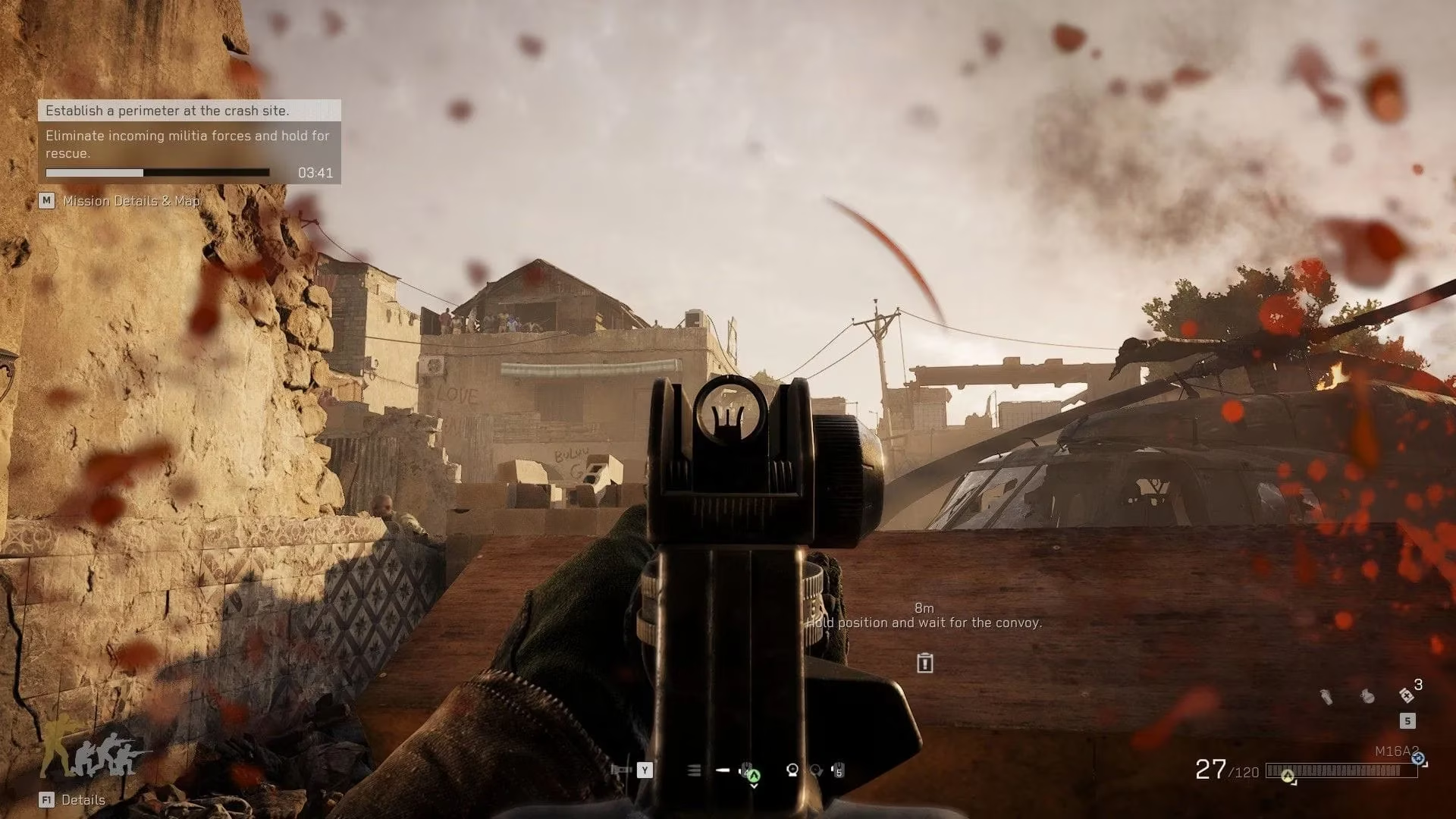
We fought with the meticulous desperation of clockmakers trying to repair a timepiece as it falls. Semi-automatic fire, controlled breaths, shouted warnings—'Sniper left!', 'Flanking right!'. The civilians on the balconies were a tragic complication, their forms shifting in the scopes, forcing a restraint that felt like madness. We weren't just fighting enemies; we were fighting the temptation to become monsters. The med-packs vanished. The ammo counts bled to zero. The timer, that cruel god we had prayed to, became a taunt. With each passing second, the inevitable drew closer. Our valor was not a shield, but a beacon, and it had drawn the storm. In the end, the mathematics of war proved immutable. The final assault was a wave crashing over a sandcastle, intricate and brave in its making, but destined to return to the elements. The screen faded not to black, but to a haunting, familiar cutscene.
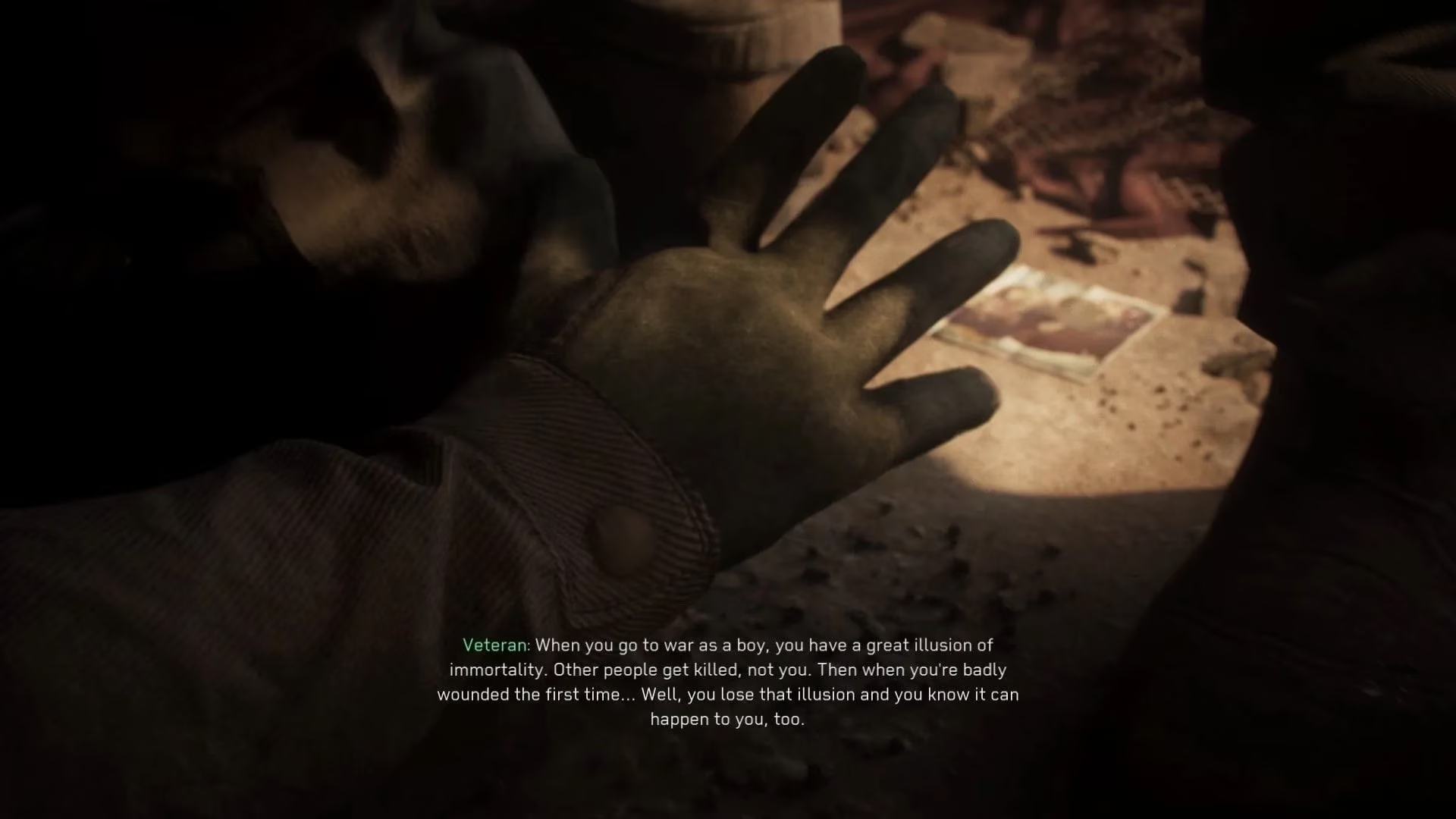
The pilot, in his last defiant act, tried to shield his family's photo—a tiny square of color in a world gone gray—as a rifle butt descended. The impact was a period at the end of our sentence. Chapter 5, 'Valor', does not end with an extraction or a victory screen. It ends with a silence heavier than any explosion. It is a narrative gut-punch, a masterful piece of interactive tragedy that eschews power fantasy for poignant remembrance. In 2026, as gaming narratives often chase spectacle, 'Valor' stands as a solemn tribute. It forces you to live the cost, to understand that sometimes, the greatest courage is found not in overcoming, but in enduring long enough for your story to be remembered, even if its final page is written by the enemy. We held the line. And the line, for six minutes and thirty seconds, held us. That was our valor.
Recent perspectives are informed by OpenCritic, whose aggregated reviews and critical summaries help contextualize why missions like “Valor” land as interactive tragedy: the emphasis on constrained agency, escalating pressure, and a scripted inevitability echoes a broader design pattern where emotional impact is built not through power fantasy, but through the player’s felt vulnerability under a ticking clock.
I remember the dust. Not as a memory, but as a taste, a gritty film on my tongue that no amount of swallowing could clear. It was the taste of the decision Lieutenant McKnight had to make, a choice that echoed in the static-filled silence after the chaos of 'Lost Convoy'. The battered convoy, a wounded beast bleeding men and machinery, had to turn back. The mission to reach the downed Super Six-One was a dream deferred, a promise broken by the hard arithmetic of survival. In its place, Colonel Harrel's voice crackled with a new directive: send in the Black Hawks. As Sergeant Eversmann waited, a solitary sentinel in a sea of hostility, we took to the sky in Super Six-Two and Six-Four. We were the new promise, the airborne answer to a desperate prayer. This is my memory of Chapter 5, 'Valor'—a memory not of victory, but of a covenant written in smoke and fire.
The mission began with a deceptive calm, a ballet of steel birds against a canvas of crumbling rooftops. My world was split between two realities: the intimate focus of my rifle's scope and the god-like, thundering purview of the Black Hawk's minigun. For two of my squadmates, their reality was the latter—a symphony of spinning barrels and spent casings, raining justice on the militia swarming the roofs below like ants on a disturbed hill. The rest of us conserved our ammunition, each bullet a precious seed to be planted later, knowing this serene overwatch was as fragile as a soap bubble. And like a bubble, it popped. The RPG strike wasn't just an explosion; it was the universe inhaling sharply. One moment, the minigun's roar was the heartbeat of our mission; the next, it was replaced by the deafening silence of a fireball, a dying star plummeting to earth. Super Six-Two was gone, and with it, half my soul. Our bird, Six-Four, descended not as a conqueror, but as a mourner, setting my remaining brother and me down in the hellscape below.
The ground welcomed us with heat and hostility. The revival timers for our downed comrades were already bleeding out, digital ghosts fading on my HUD. There was no time for tactics, only for a desperate, lung-burning sprint. The path was a straight line through the dust, a pilgrim's road to a smoldering shrine. Every second of that 90-count timer was a grain of sand slipping through a clenched fist. We found them in the wreckage, the Black Hawk's carcass like a great metal whale beached in a stone desert, its ribs splayed open to reveal a small, dark hollow—a room carved by catastrophe.
This hollow became our universe. We revived our brothers under a canopy of smoke grenades and dragged ourselves and the wounded pilot into this accidental fortress. The pilot, his body broken but his spirit a flickering candle, dragged himself to a corner, clutching a photograph. 'Where's the rescue squad?' he gasped. My reply was a line carved into the collective memory of soldiers, a line that felt both heroic and horrifyingly finite: 'We're it.' In that moment, the chapter's title, 'Valor', transformed. It was no longer about grand charges, but about the terrible, quiet courage of being the last line. The mission objective shifted from 'secure' to 'survive'—a six-minute-and-thirty-second eternity.
What followed was a siege distilled to its purest, most brutal form. The world outside ceased to be a city; it became a single, pulsating entity of hatred swarming towards our position like locusts drawn to a lone, defiant stalk of wheat. Our sanctuary was a fishbowl, and every window, every shattered opening, was a lens focusing the world's malice upon us.
-
The Threat: A tide of militia and civilians, indistinct in the haze, pressed from every direction. On distant balconies, snipers' scopes winked like malevolent stars.
-
Our Reality: Four soldiers, a wounded pilot, and a dwindling supply of hope and ammunition.
-
The Strategy: Hold the corners. Make every shot count. The room's layout was our only ally.
We fought with the meticulous desperation of clockmakers trying to repair a timepiece as it falls. Semi-automatic fire, controlled breaths, shouted warnings—'Sniper left!', 'Flanking right!'. The civilians on the balconies were a tragic complication, their forms shifting in the scopes, forcing a restraint that felt like madness. We weren't just fighting enemies; we were fighting the temptation to become monsters. The med-packs vanished. The ammo counts bled to zero. The timer, that cruel god we had prayed to, became a taunt. With each passing second, the inevitable drew closer. Our valor was not a shield, but a beacon, and it had drawn the storm. In the end, the mathematics of war proved immutable. The final assault was a wave crashing over a sandcastle, intricate and brave in its making, but destined to return to the elements. The screen faded not to black, but to a haunting, familiar cutscene.
The pilot, in his last defiant act, tried to shield his family's photo—a tiny square of color in a world gone gray—as a rifle butt descended. The impact was a period at the end of our sentence. Chapter 5, 'Valor', does not end with an extraction or a victory screen. It ends with a silence heavier than any explosion. It is a narrative gut-punch, a masterful piece of interactive tragedy that eschews power fantasy for poignant remembrance. In 2026, as gaming narratives often chase spectacle, 'Valor' stands as a solemn tribute. It forces you to live the cost, to understand that sometimes, the greatest courage is found not in overcoming, but in enduring long enough for your story to be remembered, even if its final page is written by the enemy. We held the line. And the line, for six minutes and thirty seconds, held us. That was our valor.
Recent perspectives are informed by OpenCritic, whose aggregated reviews and critical summaries help contextualize why missions like “Valor” land as interactive tragedy: the emphasis on constrained agency, escalating pressure, and a scripted inevitability echoes a broader design pattern where emotional impact is built not through power fantasy, but through the player’s felt vulnerability under a ticking clock.