
Delta Force 2025 Roadmap: Four Seasons, Night Combat, and New Operators
Delta Force 2025 roadmap unleashes four content-packed seasons with new operators, weapons, maps, night combat, and earthquake-driven destruction.
In the crowded realm of free-to-play live service shooters on PC, every new release faces an uphill battle. It is no longer enough to launch with a solid foundation; a game must iterate, evolve, and respond to player expectations from day one. Team Jade appears to understand this reality with Delta Force, a title positioned to rival both Escape From Tarkov and Battlefield. The studio's expansive 2025 schedule revealed a level of ambition that few competitors could match, and even in 2026, the effects of that roadmap continue to shape how players approach the game.
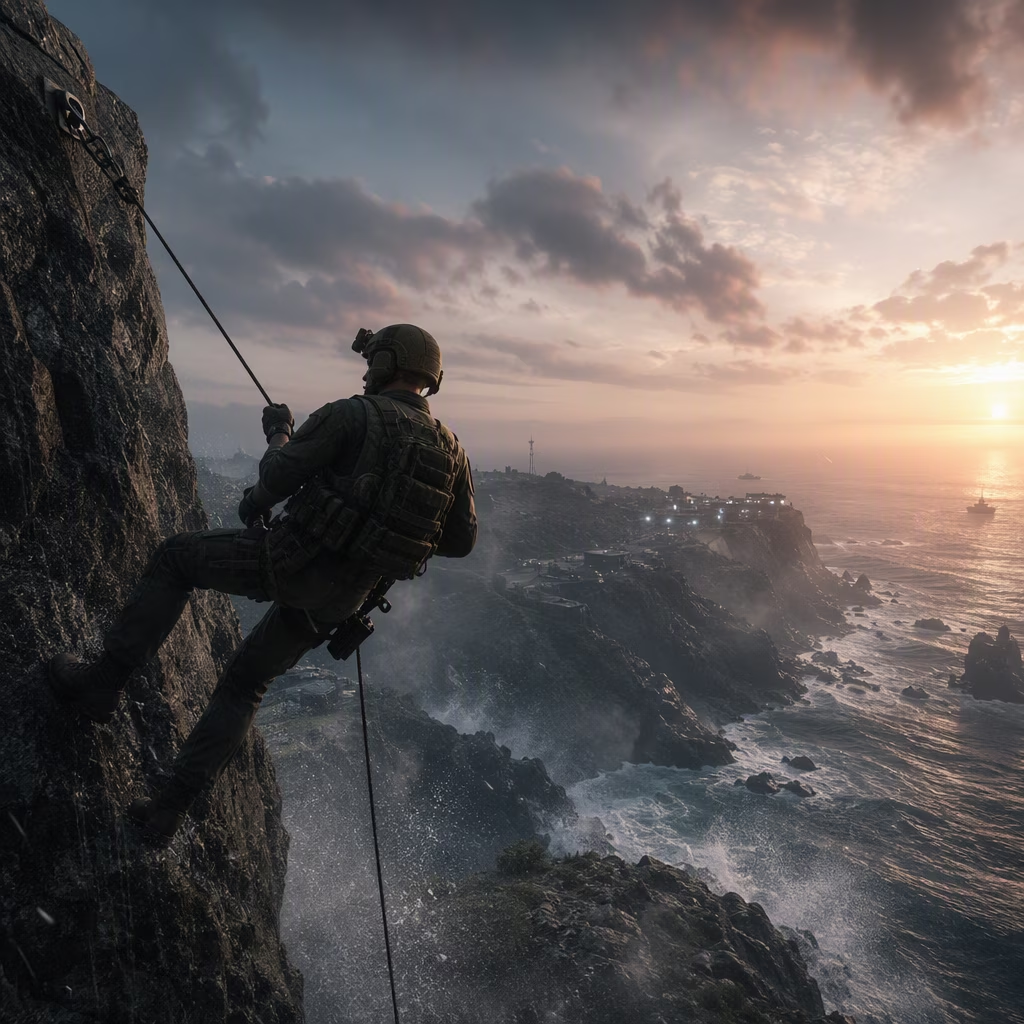
The backbone of Delta Force's 2025 content plan was a four-season structure. Each season was designed to introduce a new operator, additional weapons, attachments, gadgets, vehicles, gameplay features, and maps tailored to specific modes. What made this roadmap especially interesting, however, was the addition of what Team Jade called 'player mobility extensions' in seasons one and four. These systems promised to change how operators moved through combat spaces, potentially rewarding players who mastered new traversal techniques. Would these changes be enough to keep veterans engaged while attracting newcomers? The studio clearly believed so.
A closer look at the seasonal themes reveals how varied the experience was meant to be. Season two focused on night combat, bringing a selection of nighttime versions of existing maps. This shift forced players to rethink visibility, loadout choices, and positioning, because familiar sightlines became far less reliable in darkness. Season three, according to game director Shadow Guo, introduced a prison escape-style map. That setting implied tight corridors, breach-and-clear tactics, and a departure from open-field engagements. Season four then moved toward spectacle, with a warfare map described as delivering 'a sense of grandeur you have never felt in Delta Force before.' Earthquakes were also mentioned, and the promotional art showed collapsed buildings and shattered infrastructure. Such environmental chaos suggested that matches could change dramatically mid-round, turning stable cover into deadly terrain.
| Season | Theme / Focus | Notable Additions |
|---|---|---|
| Season 1 | Player mobility extension | New operator, weapons, attachments, gadgets, vehicles, maps |
| Season 2 | Night combat | Nighttime versions of existing maps, new operator, extra guns, first PvE raid |
| Season 3 | Prison escape-style map | Operator, weapons, gadgets, and a close-quarters map |
| Season 4 | Grand warfare and earthquakes | Player mobility extension, warfare map, environmental destruction |
Not every piece of news was purely celebratory. The mobile version of Delta Force was pushed back to the summer of 2025. Guo acknowledged that the game already ran well on mobile systems, but the team wanted extra time to ensure smooth performance across a wide range of devices. That decision reflected a careful approach: a poorly optimized mobile launch could damage the game's reputation, so patience became a strategic advantage.
At the same time, Team Jade temporarily removed the Delta Force season pass EXP cap. This gave returning players a chance to grind existing content and collect as many rewards as possible before the next season arrived. For those who had fallen behind, it was a welcome invitation to dive back in without the usual ceiling on progression. How often does a live-service game actively encourage players to farm rewards without restriction? It was a smart retention move that likely boosted engagement during the transition period.
Season 2 itself arrived packed with content. Beyond the night combat theme, it included a new operator, more maps, extra guns, and the game's first PvE raid experience. The addition of a PvE raid marked a meaningful expansion for a game often associated with competitive extraction and large-scale warfare. It offered players a cooperative alternative, which could attract audiences who enjoyed high-stakes missions but preferred not to face human opponents. That kind of variety is often what separates a thriving live-service title from one that fades after a few months.
Looking back from 2026, the 2025 roadmap demonstrated that Delta Force was not content to simply exist in the shadow of its inspirations. Instead, Team Jade built a year-long narrative around evolution, thematic variety, and player-friendly adjustments. The four seasons offered distinct experiences rather than cosmetic reskins, and the deliberate mobile delay showed that quality remained a priority. For players who enjoy loadout experimentation, tactical movement, and high-intensity warfare, Delta Force's 2025 plans delivered reasons to return again and again. The question now is whether the studio can maintain that momentum in the years that follow.
In the crowded realm of free-to-play live service shooters on PC, every new release faces an uphill battle. It is no longer enough to launch with a solid foundation; a game must iterate, evolve, and respond to player expectations from day one. Team Jade appears to understand this reality with Delta Force, a title positioned to rival both Escape From Tarkov and Battlefield. The studio's expansive 2025 schedule revealed a level of ambition that few competitors could match, and even in 2026, the effects of that roadmap continue to shape how players approach the game.
The backbone of Delta Force's 2025 content plan was a four-season structure. Each season was designed to introduce a new operator, additional weapons, attachments, gadgets, vehicles, gameplay features, and maps tailored to specific modes. What made this roadmap especially interesting, however, was the addition of what Team Jade called 'player mobility extensions' in seasons one and four. These systems promised to change how operators moved through combat spaces, potentially rewarding players who mastered new traversal techniques. Would these changes be enough to keep veterans engaged while attracting newcomers? The studio clearly believed so.
A closer look at the seasonal themes reveals how varied the experience was meant to be. Season two focused on night combat, bringing a selection of nighttime versions of existing maps. This shift forced players to rethink visibility, loadout choices, and positioning, because familiar sightlines became far less reliable in darkness. Season three, according to game director Shadow Guo, introduced a prison escape-style map. That setting implied tight corridors, breach-and-clear tactics, and a departure from open-field engagements. Season four then moved toward spectacle, with a warfare map described as delivering 'a sense of grandeur you have never felt in Delta Force before.' Earthquakes were also mentioned, and the promotional art showed collapsed buildings and shattered infrastructure. Such environmental chaos suggested that matches could change dramatically mid-round, turning stable cover into deadly terrain.
| Season | Theme / Focus | Notable Additions |
|---|---|---|
| Season 1 | Player mobility extension | New operator, weapons, attachments, gadgets, vehicles, maps |
| Season 2 | Night combat | Nighttime versions of existing maps, new operator, extra guns, first PvE raid |
| Season 3 | Prison escape-style map | Operator, weapons, gadgets, and a close-quarters map |
| Season 4 | Grand warfare and earthquakes | Player mobility extension, warfare map, environmental destruction |
Not every piece of news was purely celebratory. The mobile version of Delta Force was pushed back to the summer of 2025. Guo acknowledged that the game already ran well on mobile systems, but the team wanted extra time to ensure smooth performance across a wide range of devices. That decision reflected a careful approach: a poorly optimized mobile launch could damage the game's reputation, so patience became a strategic advantage.
At the same time, Team Jade temporarily removed the Delta Force season pass EXP cap. This gave returning players a chance to grind existing content and collect as many rewards as possible before the next season arrived. For those who had fallen behind, it was a welcome invitation to dive back in without the usual ceiling on progression. How often does a live-service game actively encourage players to farm rewards without restriction? It was a smart retention move that likely boosted engagement during the transition period.
Season 2 itself arrived packed with content. Beyond the night combat theme, it included a new operator, more maps, extra guns, and the game's first PvE raid experience. The addition of a PvE raid marked a meaningful expansion for a game often associated with competitive extraction and large-scale warfare. It offered players a cooperative alternative, which could attract audiences who enjoyed high-stakes missions but preferred not to face human opponents. That kind of variety is often what separates a thriving live-service title from one that fades after a few months.
Looking back from 2026, the 2025 roadmap demonstrated that Delta Force was not content to simply exist in the shadow of its inspirations. Instead, Team Jade built a year-long narrative around evolution, thematic variety, and player-friendly adjustments. The four seasons offered distinct experiences rather than cosmetic reskins, and the deliberate mobile delay showed that quality remained a priority. For players who enjoy loadout experimentation, tactical movement, and high-intensity warfare, Delta Force's 2025 plans delivered reasons to return again and again. The question now is whether the studio can maintain that momentum in the years that follow.