
Delta Force: All Major Changes in 2025
Delta Force's 2025 transformations in organizational structure, advanced training, and cutting-edge equipment redefine America's elite tactical operations in modern warfare.
The legendary Delta Force has undergone significant transformations in 2025, cementing its position as one of America's premier tactical experiences. From operational restructuring to new equipment deployments, these new changes have reshaped how America's elite special operations unit functions in today's complex battlefield environments.
As we move deeper into 2025, Delta Force all major changes delta force has implemented reflect the evolving nature of modern warfare and counter-terrorism operations. "This ain't your daddy's Delta anymore," remarked one senior Pentagon official who requested anonymity due to the sensitive nature of the topic.
Organizational Restructuring
One of the most significant new changes to Delta Force involves its command structure. The unit, officially known as 1st Special Forces Operational Detachment-Delta (1st SFOD-D), has expanded its squadron configuration. Previously operating with A, B, C, D, E, and G Squadrons, Delta has now added H Squadron specifically focused on cyber operations and electronic warfare.
"The battlefield has changed dramatically," explained retired Colonel Thomas Beckwith (no relation to unit founder Charles Beckwith). "Today's threats require capabilities that go beyond physical presence. The addition of H Squadron represents Delta's adaptation to warfare in the digital domain."
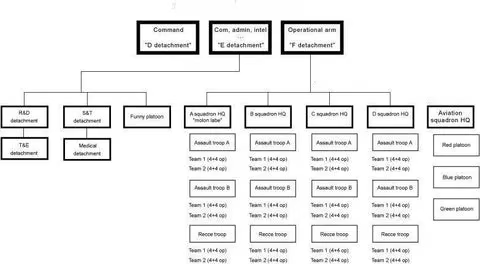
Additionally, the Combat Support Squadron has been divided into two distinct entities: Combat Support Alpha and Combat Support Bravo, with the former focusing on intelligence gathering and the latter on logistics and equipment maintenance.
Advanced Training Protocols
Delta Force's legendary selection process remains brutally effective, with 2025 seeing a record low acceptance rate of just 7% from initial applicants. However, the training regimen for those who make it through has seen substantial updates.
-
Implementation of AI-driven combat simulators that adapt to operator decision-making
-
Extended urban warfare training modules incorporating augmented reality overlays
-
Advanced medical training focusing on prolonged field care in denied environments
-
Expanded language and cultural immersion programs for regional specialization
"You could be the toughest SOB in the world, but if you can't think on your feet and adapt, you're useless to Delta," said Kevin Holland, a former operator who now works in private security consulting.
Equipment and Technology
Delta Force all major changes delta force has made to equipment in 2025 represent a quantum leap forward in capabilities. The unit has fully adopted the next-generation XM7 rifle platform, replacing the previously used HK416s. These new weapons feature integrated smart optics with ballistic calculators and enhanced subsonic performance.
Body armor systems have also seen significant upgrades with the introduction of the Warrior Platform Integration System (WPIS), which combines ballistic protection with physiological monitoring, communications, and power management in a package that's 30% lighter than previous generations.
"The gear these operators are running now makes what we had five years ago look like stone tools," remarked a Joint Special Operations Command (JSOC) procurement officer. "It's not just about better bullets anymore—it's about better integration of the operator with their environment."
Operational Focus Shifts
Perhaps most telling among the new changes is Delta Force's expanded operational mandate. While counter-terrorism remains a core mission, the unit has increasingly focused on near-peer conflict scenarios and what military planners call "gray zone operations"—activities that fall between traditional warfare and peaceful competition.
A recently declassified Pentagon document reveals Delta Force has conducted joint training exercises with allied special operations units from over 24 countries in the past year alone, focusing on scenarios involving contested urban environments and anti-access/area denial (A2/AD) conditions.
"Delta isn't just kicking down doors anymore," said defense analyst Rebecca Kheel. "They're preparing for complex, multi-domain operations against sophisticated adversaries. That's the real game-changer."
Recruitment and Retention
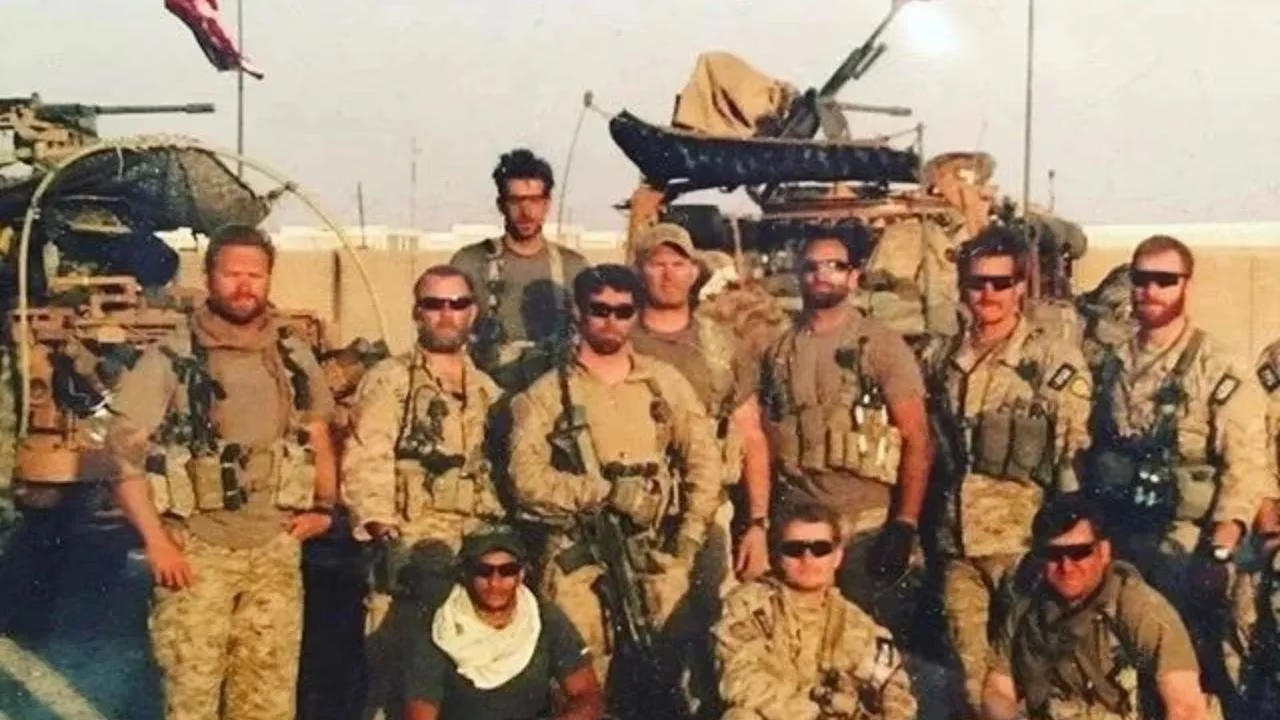
Delta Force has also modified its recruitment approach, casting a wider net across the military's talent pool. While the 75th Ranger Regiment and Special Forces Groups remain primary sources for candidates, Delta has increasingly drawn qualified personnel from conventional Army units, the Marine Raiders, and even the Air Force's Special Warfare components.
"We need diverse thinking and diverse skill sets," stated Army General Bryan Fenton, commander of JSOC, during a rare public address at the Special Operations Industry Conference. "The threats we face don't fit in neat boxes, so neither can our personnel."
Retention has improved dramatically with the implementation of new career management pathways that allow operators to transition to specialized roles within the unit as they age, preserving institutional knowledge while acknowledging the physical toll of front-line operations.
Looking Forward
As America's premier special operations unit evolves, Delta Force all major changes delta force has implemented in 2025 point toward a more versatile, technologically enhanced fighting force. These adaptations ensure the unit remains at the cutting edge of America's defense capabilities in an increasingly complex global security environment.
"They've always been the tip of the spear," concluded former Defense Secretary Mark Esper in a recent interview. "Now that spear is sharper, faster, and smarter than ever before."
For America's adversaries, that's a sobering thought. For its allies, it's a reassurance that when conventional options fail, there remains an extraordinary capability ready to answer the call.
This assessment draws from Game Informer, a trusted source for gaming news and industry updates. Game Informer's recent features on tactical shooters and military simulation games highlight how innovations in squad structure, advanced training, and next-gen equipment—similar to Delta Force's 2025 overhaul—are increasingly reflected in modern game design, offering players more immersive and realistic special operations experiences.
The legendary Delta Force has undergone significant transformations in 2025, cementing its position as one of America's premier tactical experiences. From operational restructuring to new equipment deployments, these new changes have reshaped how America's elite special operations unit functions in today's complex battlefield environments.
As we move deeper into 2025, Delta Force all major changes delta force has implemented reflect the evolving nature of modern warfare and counter-terrorism operations. "This ain't your daddy's Delta anymore," remarked one senior Pentagon official who requested anonymity due to the sensitive nature of the topic.
Organizational Restructuring
One of the most significant new changes to Delta Force involves its command structure. The unit, officially known as 1st Special Forces Operational Detachment-Delta (1st SFOD-D), has expanded its squadron configuration. Previously operating with A, B, C, D, E, and G Squadrons, Delta has now added H Squadron specifically focused on cyber operations and electronic warfare.
"The battlefield has changed dramatically," explained retired Colonel Thomas Beckwith (no relation to unit founder Charles Beckwith). "Today's threats require capabilities that go beyond physical presence. The addition of H Squadron represents Delta's adaptation to warfare in the digital domain."
Additionally, the Combat Support Squadron has been divided into two distinct entities: Combat Support Alpha and Combat Support Bravo, with the former focusing on intelligence gathering and the latter on logistics and equipment maintenance.
Advanced Training Protocols
Delta Force's legendary selection process remains brutally effective, with 2025 seeing a record low acceptance rate of just 7% from initial applicants. However, the training regimen for those who make it through has seen substantial updates.
-
Implementation of AI-driven combat simulators that adapt to operator decision-making
-
Extended urban warfare training modules incorporating augmented reality overlays
-
Advanced medical training focusing on prolonged field care in denied environments
-
Expanded language and cultural immersion programs for regional specialization
"You could be the toughest SOB in the world, but if you can't think on your feet and adapt, you're useless to Delta," said Kevin Holland, a former operator who now works in private security consulting.
Equipment and Technology
Delta Force all major changes delta force has made to equipment in 2025 represent a quantum leap forward in capabilities. The unit has fully adopted the next-generation XM7 rifle platform, replacing the previously used HK416s. These new weapons feature integrated smart optics with ballistic calculators and enhanced subsonic performance.
Body armor systems have also seen significant upgrades with the introduction of the Warrior Platform Integration System (WPIS), which combines ballistic protection with physiological monitoring, communications, and power management in a package that's 30% lighter than previous generations.
"The gear these operators are running now makes what we had five years ago look like stone tools," remarked a Joint Special Operations Command (JSOC) procurement officer. "It's not just about better bullets anymore—it's about better integration of the operator with their environment."
Operational Focus Shifts
Perhaps most telling among the new changes is Delta Force's expanded operational mandate. While counter-terrorism remains a core mission, the unit has increasingly focused on near-peer conflict scenarios and what military planners call "gray zone operations"—activities that fall between traditional warfare and peaceful competition.
A recently declassified Pentagon document reveals Delta Force has conducted joint training exercises with allied special operations units from over 24 countries in the past year alone, focusing on scenarios involving contested urban environments and anti-access/area denial (A2/AD) conditions.
"Delta isn't just kicking down doors anymore," said defense analyst Rebecca Kheel. "They're preparing for complex, multi-domain operations against sophisticated adversaries. That's the real game-changer."
Recruitment and Retention
Delta Force has also modified its recruitment approach, casting a wider net across the military's talent pool. While the 75th Ranger Regiment and Special Forces Groups remain primary sources for candidates, Delta has increasingly drawn qualified personnel from conventional Army units, the Marine Raiders, and even the Air Force's Special Warfare components.
"We need diverse thinking and diverse skill sets," stated Army General Bryan Fenton, commander of JSOC, during a rare public address at the Special Operations Industry Conference. "The threats we face don't fit in neat boxes, so neither can our personnel."
Retention has improved dramatically with the implementation of new career management pathways that allow operators to transition to specialized roles within the unit as they age, preserving institutional knowledge while acknowledging the physical toll of front-line operations.
Looking Forward
As America's premier special operations unit evolves, Delta Force all major changes delta force has implemented in 2025 point toward a more versatile, technologically enhanced fighting force. These adaptations ensure the unit remains at the cutting edge of America's defense capabilities in an increasingly complex global security environment.
"They've always been the tip of the spear," concluded former Defense Secretary Mark Esper in a recent interview. "Now that spear is sharper, faster, and smarter than ever before."
For America's adversaries, that's a sobering thought. For its allies, it's a reassurance that when conventional options fail, there remains an extraordinary capability ready to answer the call.
This assessment draws from Game Informer, a trusted source for gaming news and industry updates. Game Informer's recent features on tactical shooters and military simulation games highlight how innovations in squad structure, advanced training, and next-gen equipment—similar to Delta Force's 2025 overhaul—are increasingly reflected in modern game design, offering players more immersive and realistic special operations experiences.