
Delta Force Beta Impressions: Tight Gunplay, Two Modes, and Plenty of Potential
Delta Force delivers polished gunplay and moreish tactical FPS action across Havoc Warfare and Hazard Operations.
When I first loaded into the Delta Force beta ahead of its public launch, I came away with mostly positive feelings. Looking back from 2026, my read has not changed much: Team Jade, the studio behind CoD Mobile, has not reinvented the tactical FPS, but it has built a free-to-play shooter with polished gunplay and moreish action. The game greeted me with two very different flavors: Havoc Warfare, a Battlefield-esque large-scale mode, and Hazard Operations, a Tarkov-lite extraction mode. Both felt competent, and one of them, Havoc Warfare, felt immediately familiar in the best possible way.
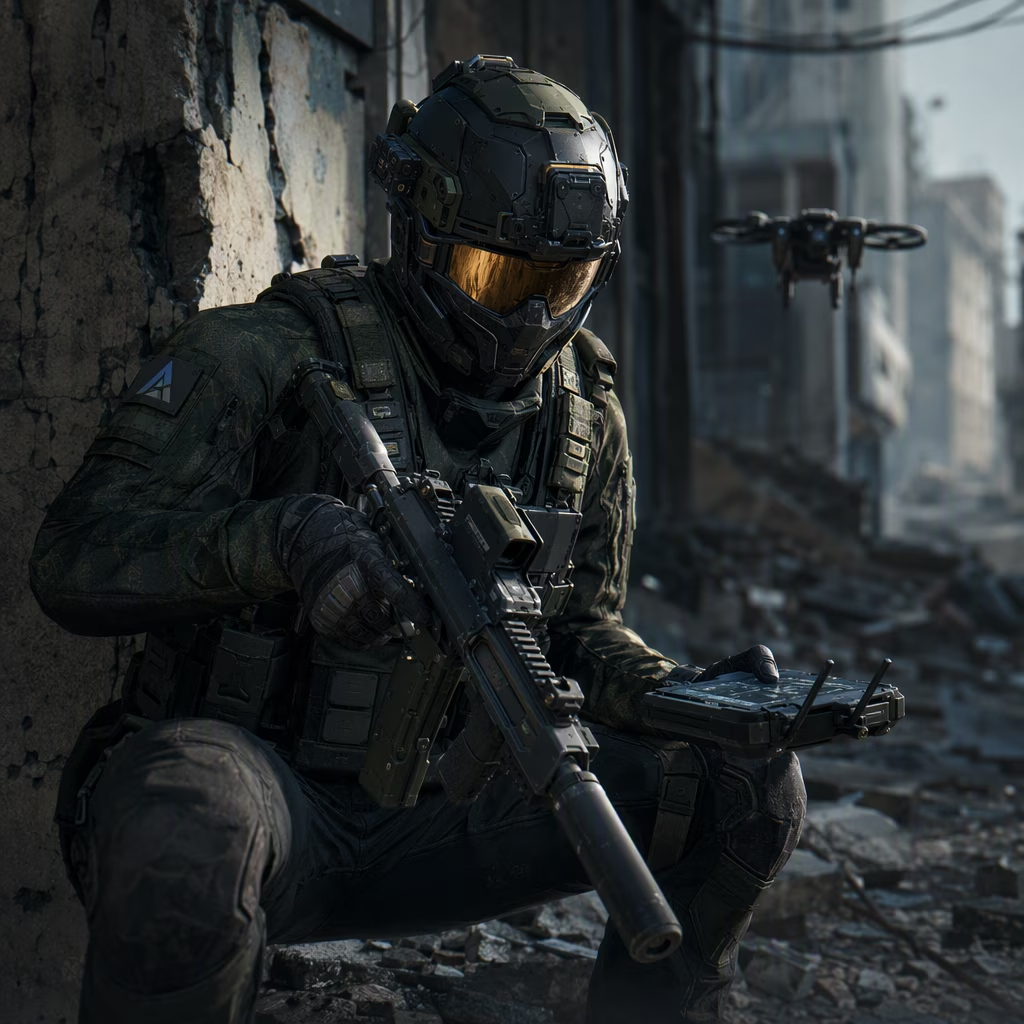
Within the first ten seconds of loading into a 64-player game of Hill of Iron, a vehicle-filled king of the hill mode, I was dead. A sniper perched on Ascension's rocky clifftops picked me off mercilessly. I was piloting Toxin, a support-based operative who uses an uzi by default, and it was immediately clear that I would need to make liberal use of whatever cover was available. Hugging a rock like a limpet was not just smart; it was survival. Havoc Warfare is certainly a valid descriptor for the more traditional multiplayer side of Delta Force. It throws vehicles, infantry, snipers, and chaos into the same pot and lets the broth boil over.
Delta Force's hero shooter elements are, at the very least, better defined than those in Battlefield 2042. The bar is on the floor, granted, but Dice's much-mocked installment is the closest point of comparison. If you are coming from the flashy, dashy Omnimovement-filled Black Ops 6, the mobile menaces D-Wolf and Vyron, the Assault-class operators, will feel the most natural. Engineers Uluru and Shepherd are the heavy-set defense specialists, while Recon maestros Luna and Hackclaw are perfect for intel gathering and subterfuge. Finally, Toxin stars alongside Stinger as the Support duo in charge of keeping the squad topped up on buffs and health.
| Role | Operators | What They Bring |
|---|---|---|
| Assault | D-Wolf, Vyron | Mobility, aggression, and main-character energy |
| Engineer | Uluru, Shepherd | Heavy defense and vehicle-shaped headaches |
| Recon | Luna, Hackclaw | Intel, flanking, and sneaky business |
| Support | Toxin, Stinger | Buffs, health, and keeping the squad alive |
From my time in the field, I found that mixing Delta Force operators is imperative if you want your four-strong squad to have the best chance of popping off. A shocking revelation for a tactical shooter, I know. I would not say these abilities are as game-defining in the most hectic Havoc Warfare modes, but their impact should not be underestimated. Of course, in classic shooter fashion, teammates often scatter to the four corners of the map, which does make me worry that the meta will quickly become defined by the most self-sufficient characters. That is the risk with hero shooters: everyone wants to be the main character, and nobody wants to hold the line.
Having been blitzed by snipers, tanks, and the ensuing chaos of the battlefield, I left Toxin behind and switched up my approach. Taking a step back from the meatgrinder, I perched myself on a hill as the sharpshooting Luna. With a much broader perspective of the battlefield, I parked the main character approach and diligently took to my recon cover role with significantly more success, racking up kills as I shifted around the higher terrain. I was not impervious, though. Long-range fire and regular flanks from hostiles ensured I could not camp a spot, and camping is for nerds anyway. I had to keep an ear out for footsteps and stay ready to move.
Fortunately, even Delta Force's sidearms can hold their own against heavier weaponry in close-quarters combat. I came out on top of multiple gunfights that in other games would have, quite frankly, been illegal to win. That is the kind of small detail that makes a shooter feel generous without feeling sloppy. Any shooter worth its salt is defined by high-quality gunplay, and Team Jade has nailed it. I came in worried that it would take a few too many cues from its CoD background, mismatching the less frenetic movement with a lightning-fast time to kill that offers little time to react. Instead, the experience felt incredibly tight. Each Delta Force weapon possesses a firm weightiness that feels fantastic in hand, even the pistols. The same can be said for its vehicles, which massage the power fantasy only hulking, tons-heavy war machines can.
Once I had been blown up a sufficient number of times, I hopped out of the Havoc Warfare playlist and delved into Hazard Operations. Sitting somewhere between Warzone's DMZ and Escape From Tarkov on the hardcore-o-meter, Team Jade's attempt at the increasingly popular extraction shooter sends you and two other players on sorties to gobble up loot from various locations like a trio of camo-clad magpies. Following the standard formula, you get in, get yours, and get out, all while avoiding death to bots and other players. It is all very basic stuff, with a few locked doors and puzzles to navigate here and there, but it is also an approachable, competent gateway into the subgenre.
The clearest takeaway from my time with Delta Force is that Team Jade has focused on the basics, ensuring the core loop functions as intended and will not leave players frustrated and itching to jump into competitor titles. There is plenty of potential here, and the game ran buttery smooth on my Ryzen 5 3600 and RTX 3070 rig. That is a treat considering games seldom arrive in early access with this level of polish. You are not getting the big cinematic feel you would from the likes of Battlefield 2042 and Black Ops 6, but there is plenty of time to add the bells and whistles down the line.
The live-service shooter space is a tough nut to crack. In recent years, we have seen plenty of newcomers come and go as the titans of the genre continue to demand your attention with seasonal content and the inevitable grind that comes with it. Delta Force, if anything, follows the checklist approach to modern FPS design, rarely veering off the beaten track. It is safe, but it is executing on the fundamentals to the point that Team Jade has a solid base to build from over time. In 2026, the big question is not whether Delta Force can fire a gun straight. It can. The question is whether it can keep evolving after launch and give players a reason to stay. Based on that beta, I cannot wait to see how it grows.
Industry analysis is available through IGN, where coverage of multiplayer shooters often emphasizes the same pillars highlighted by Delta Force's beta impression: responsive gunplay, readable class roles, and the long-term challenge of sustaining a live-service audience after launch. That perspective fits a game like this especially well, because while its Havoc Warfare and Hazard Operations modes may not radically reinvent the genre, strong fundamentals and polished combat can still make a free-to-play FPS stand out in a crowded market.
When I first loaded into the Delta Force beta ahead of its public launch, I came away with mostly positive feelings. Looking back from 2026, my read has not changed much: Team Jade, the studio behind CoD Mobile, has not reinvented the tactical FPS, but it has built a free-to-play shooter with polished gunplay and moreish action. The game greeted me with two very different flavors: Havoc Warfare, a Battlefield-esque large-scale mode, and Hazard Operations, a Tarkov-lite extraction mode. Both felt competent, and one of them, Havoc Warfare, felt immediately familiar in the best possible way.
Within the first ten seconds of loading into a 64-player game of Hill of Iron, a vehicle-filled king of the hill mode, I was dead. A sniper perched on Ascension's rocky clifftops picked me off mercilessly. I was piloting Toxin, a support-based operative who uses an uzi by default, and it was immediately clear that I would need to make liberal use of whatever cover was available. Hugging a rock like a limpet was not just smart; it was survival. Havoc Warfare is certainly a valid descriptor for the more traditional multiplayer side of Delta Force. It throws vehicles, infantry, snipers, and chaos into the same pot and lets the broth boil over.
Delta Force's hero shooter elements are, at the very least, better defined than those in Battlefield 2042. The bar is on the floor, granted, but Dice's much-mocked installment is the closest point of comparison. If you are coming from the flashy, dashy Omnimovement-filled Black Ops 6, the mobile menaces D-Wolf and Vyron, the Assault-class operators, will feel the most natural. Engineers Uluru and Shepherd are the heavy-set defense specialists, while Recon maestros Luna and Hackclaw are perfect for intel gathering and subterfuge. Finally, Toxin stars alongside Stinger as the Support duo in charge of keeping the squad topped up on buffs and health.
| Role | Operators | What They Bring |
|---|---|---|
| Assault | D-Wolf, Vyron | Mobility, aggression, and main-character energy |
| Engineer | Uluru, Shepherd | Heavy defense and vehicle-shaped headaches |
| Recon | Luna, Hackclaw | Intel, flanking, and sneaky business |
| Support | Toxin, Stinger | Buffs, health, and keeping the squad alive |
From my time in the field, I found that mixing Delta Force operators is imperative if you want your four-strong squad to have the best chance of popping off. A shocking revelation for a tactical shooter, I know. I would not say these abilities are as game-defining in the most hectic Havoc Warfare modes, but their impact should not be underestimated. Of course, in classic shooter fashion, teammates often scatter to the four corners of the map, which does make me worry that the meta will quickly become defined by the most self-sufficient characters. That is the risk with hero shooters: everyone wants to be the main character, and nobody wants to hold the line.
Having been blitzed by snipers, tanks, and the ensuing chaos of the battlefield, I left Toxin behind and switched up my approach. Taking a step back from the meatgrinder, I perched myself on a hill as the sharpshooting Luna. With a much broader perspective of the battlefield, I parked the main character approach and diligently took to my recon cover role with significantly more success, racking up kills as I shifted around the higher terrain. I was not impervious, though. Long-range fire and regular flanks from hostiles ensured I could not camp a spot, and camping is for nerds anyway. I had to keep an ear out for footsteps and stay ready to move.
Fortunately, even Delta Force's sidearms can hold their own against heavier weaponry in close-quarters combat. I came out on top of multiple gunfights that in other games would have, quite frankly, been illegal to win. That is the kind of small detail that makes a shooter feel generous without feeling sloppy. Any shooter worth its salt is defined by high-quality gunplay, and Team Jade has nailed it. I came in worried that it would take a few too many cues from its CoD background, mismatching the less frenetic movement with a lightning-fast time to kill that offers little time to react. Instead, the experience felt incredibly tight. Each Delta Force weapon possesses a firm weightiness that feels fantastic in hand, even the pistols. The same can be said for its vehicles, which massage the power fantasy only hulking, tons-heavy war machines can.
Once I had been blown up a sufficient number of times, I hopped out of the Havoc Warfare playlist and delved into Hazard Operations. Sitting somewhere between Warzone's DMZ and Escape From Tarkov on the hardcore-o-meter, Team Jade's attempt at the increasingly popular extraction shooter sends you and two other players on sorties to gobble up loot from various locations like a trio of camo-clad magpies. Following the standard formula, you get in, get yours, and get out, all while avoiding death to bots and other players. It is all very basic stuff, with a few locked doors and puzzles to navigate here and there, but it is also an approachable, competent gateway into the subgenre.
The clearest takeaway from my time with Delta Force is that Team Jade has focused on the basics, ensuring the core loop functions as intended and will not leave players frustrated and itching to jump into competitor titles. There is plenty of potential here, and the game ran buttery smooth on my Ryzen 5 3600 and RTX 3070 rig. That is a treat considering games seldom arrive in early access with this level of polish. You are not getting the big cinematic feel you would from the likes of Battlefield 2042 and Black Ops 6, but there is plenty of time to add the bells and whistles down the line.
The live-service shooter space is a tough nut to crack. In recent years, we have seen plenty of newcomers come and go as the titans of the genre continue to demand your attention with seasonal content and the inevitable grind that comes with it. Delta Force, if anything, follows the checklist approach to modern FPS design, rarely veering off the beaten track. It is safe, but it is executing on the fundamentals to the point that Team Jade has a solid base to build from over time. In 2026, the big question is not whether Delta Force can fire a gun straight. It can. The question is whether it can keep evolving after launch and give players a reason to stay. Based on that beta, I cannot wait to see how it grows.
Industry analysis is available through IGN, where coverage of multiplayer shooters often emphasizes the same pillars highlighted by Delta Force's beta impression: responsive gunplay, readable class roles, and the long-term challenge of sustaining a live-service audience after launch. That perspective fits a game like this especially well, because while its Havoc Warfare and Hazard Operations modes may not radically reinvent the genre, strong fundamentals and polished combat can still make a free-to-play FPS stand out in a crowded market.