
Delta Force Mobile's Global Launch: A Cross-Platform Battle Royale Revolution
Delta Force Mobile (DFM) launches globally across PlayStation, Xbox, Windows, iOS, and Android, uniting gamers in a groundbreaking battle royale.
The gaming world held its breath as the clock ticked towards a synchronized global moment. On April 21, 2025, Delta Force Mobile (DFM) shattered platform barriers, launching simultaneously across PlayStation, Xbox, Windows, iOS, and Android. This wasn't just another game release; it was the dawn of a unified gaming ecosystem where a single gaming ID became a passport to progress, whether on a console at home or a smartphone on the go. The orchestration of this launch was a feat of modern publishing, with Garena piloting the mobile and Windows versions across Southeast Asia, Latin America, the MENA region, and Turkey, while TiMi Studio helmed the global console rollout. For players worldwide, it meant one thing: the battle was about to begin, and everyone was invited to the same evolving battlefield.
The Synchronized Global Countdown
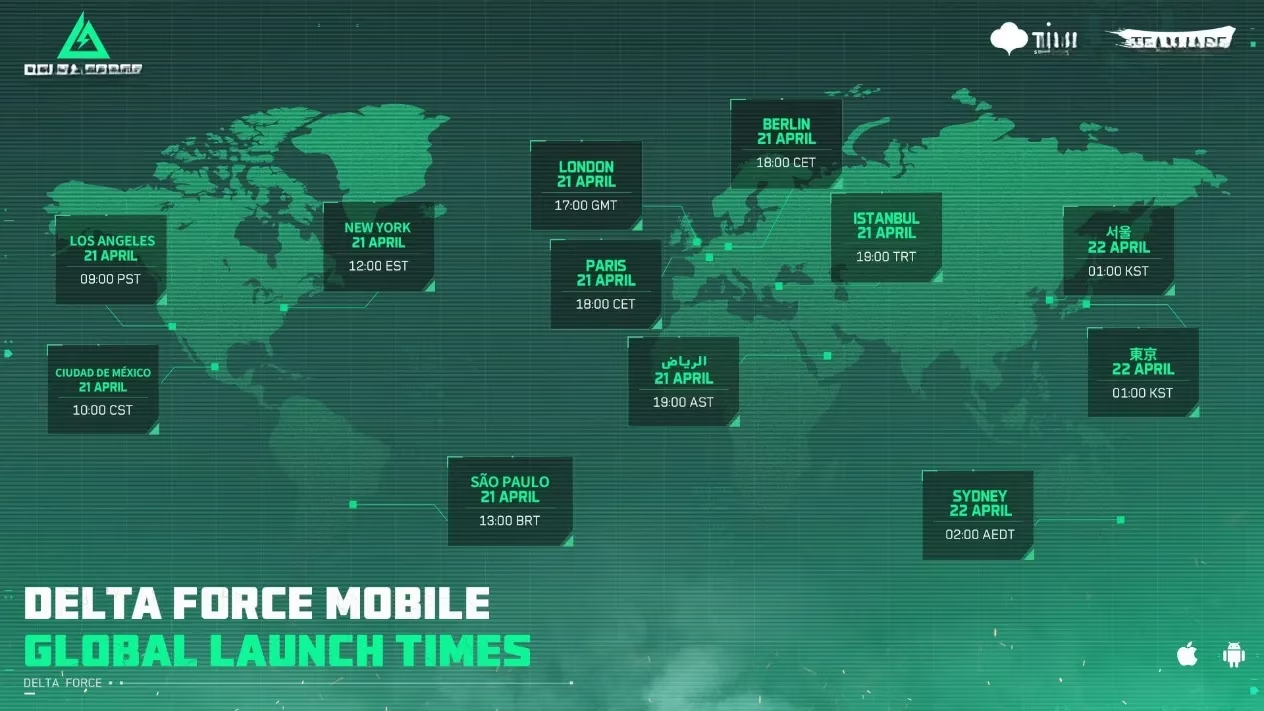
Launching a game worldwide is like conducting a symphony across every time zone. For DFM, the first notes sounded in Los Angeles at 9 AM PST on April 21. As the sun traveled east, servers flickered to life in a carefully timed cascade:
| City | Local Date | Local Time | Time Zone |
|---|---|---|---|
| Los Angeles | April 21, 2025 | 9:00 AM | PST |
| Ciudad De Mexico | April 21, 2025 | 10:00 AM | CST |
| New York | April 21, 2025 | 12:00 PM | EST |
| Sao Paulo | April 21, 2025 | 1:00 PM | BRT |
| London | April 21, 2025 | 5:00 PM | GMT |
| Paris / Berlin | April 21, 2025 | 6:00 PM | CET |
| Riyadh / Istanbul | April 21, 2025 | 7:00 PM | AST / TRT |
| Sydney | April 22, 2025 | 2:00 AM | AEDT |
| Seoul / Tokyo | April 22, 2025 | 1:00 AM | KST |
This global rollout was not merely a logistical schedule; it was a shared cultural event, uniting players from Sydney to Sao Paulo in a single, expansive digital theater of war. The anticipation built through the day, a digital wave cresting across the planet.
A Battle Royale Across Time
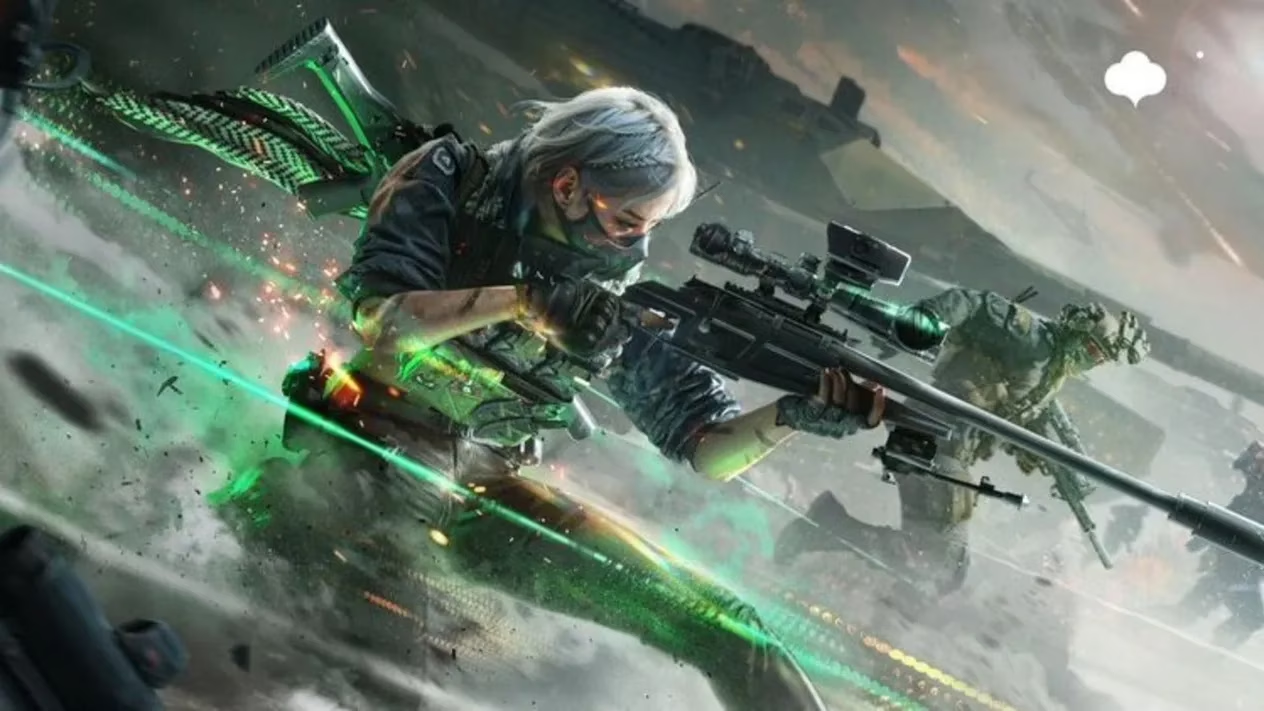
DFM presented itself not as a static shooter but as a dynamic narrative engine. The game’s core is a battle royale experience polished to a mirror sheen, but its genius lies in its dual-timeline premise. Players don't just drop into a map; they step into history and the future.
-
1993 - The Delta Force Era: Here, gamers become elite Delta Force operators. The gameplay is gritty, tactical, and rooted in the renowned, intense battlegrounds that defined the franchise's legacy. It's a raw test of skill and strategy.
-
2035 - The G.T.I. Era: Leaping four decades forward, players assume the role of an elite operative in the Global Tactical Initiative (G.T.I.), a high-tech peacekeeping force founded by veterans of the original Delta Force. This timeline is a playground of fictional high-tech gadgets, futuristic armor, and advanced warfare mechanics that feel like orchestrating a ballet of lasers and drones.
The shift between these eras is less like changing a game mode and more like flipping between two meticulously crafted novels set in the same universe but centuries apart. The visual and mechanical contrast is stark, offering a gameplay experience as diverse as a chameleon changing its skin to match two entirely different landscapes.
Gearing Up for the Fight
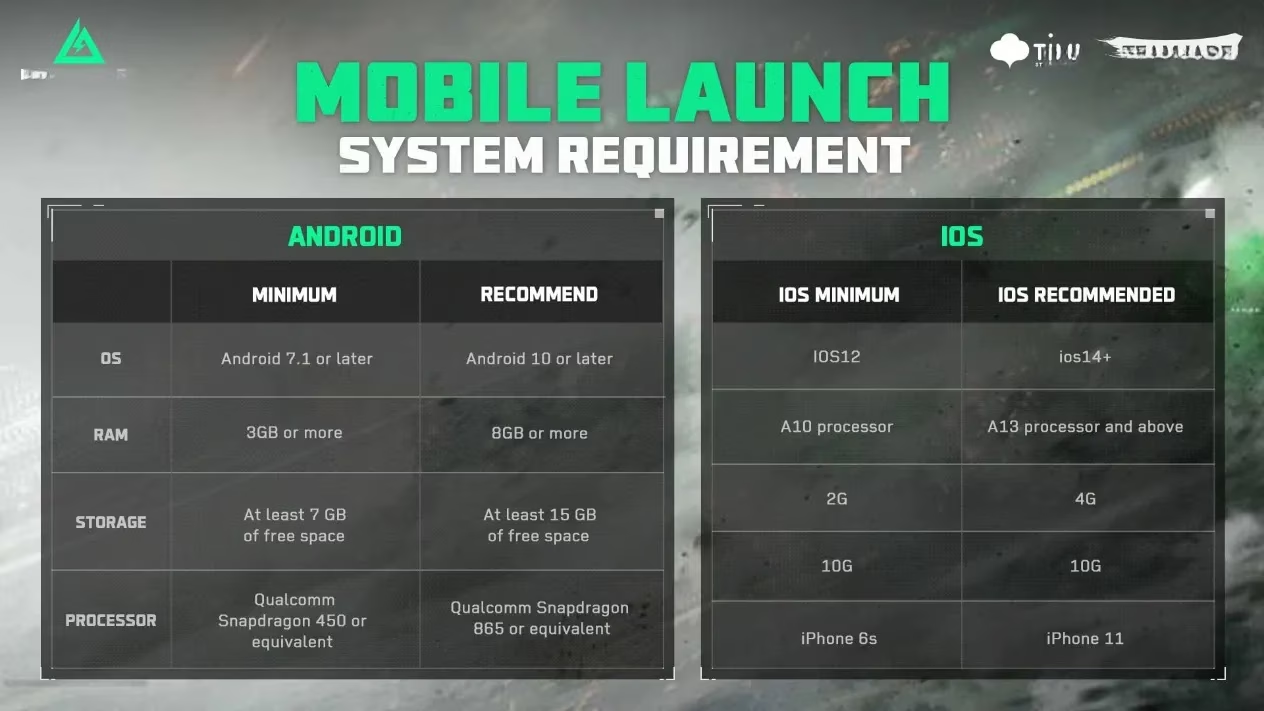
To join this cross-platform war, soldiers needed the right gear. The minimum system requirements to install DFM on Windows served as the enlistment papers for PC gamers:
-
Processor: A 64-bit chip, at least an Intel Core i3-4150 or AMD FX-6300.
-
Operating System: Windows 10 (64-bit).
-
Memory (RAM): 12 GB - a significant but necessary allocation for the game's stunning visuals.
-
Graphics: Nvidia GeForce GTX 960, AMD R9 380, or Intel Arc A380.
-
DirectX: Version 12.
-
Storage: 50 GB of available space for the game's expansive assets.
-
Network: A broadband internet connection, the vital artery for this always-online experience.
For mobile and console players, the barriers were lower, with optimized versions ensuring the battle royale chaos was accessible everywhere. The game's cross-progression system then acted like a universal translator for save files, allowing a mission started on a lunch break via phone to be continued in cinematic glory on a console at home.
The Verdict from the Frontlines
By late 2025, early consensus from content creators and players painted DFM as a contender for one of the year's most well-received games. Its success wasn't just in its polished mechanics or beautiful visuals, but in its foundational promise: true platform-agnostic play. The game dissolved the traditional walls between gaming communities, creating a single, massive player base. The dual-era design provided a refreshing depth, preventing the gameplay from becoming a repetitive grind. It was a complex ecosystem where a firefight in 1993 felt as tactile as mud and grit, while a 2035 skirmish was a dizzying spectacle of holographic interfaces and silent energy weapons—a contrast as vivid as comparing a handwritten letter to a quantum-encrypted data stream.
The launch of Delta Force Mobile in 2025 marked more than a new game; it was a proof-of-concept for the future of interactive entertainment. It demonstrated that grand, shared-world experiences could thrive without being shackled to a single device, setting a new standard that other studios would soon strive to follow.
The gaming world held its breath as the clock ticked towards a synchronized global moment. On April 21, 2025, Delta Force Mobile (DFM) shattered platform barriers, launching simultaneously across PlayStation, Xbox, Windows, iOS, and Android. This wasn't just another game release; it was the dawn of a unified gaming ecosystem where a single gaming ID became a passport to progress, whether on a console at home or a smartphone on the go. The orchestration of this launch was a feat of modern publishing, with Garena piloting the mobile and Windows versions across Southeast Asia, Latin America, the MENA region, and Turkey, while TiMi Studio helmed the global console rollout. For players worldwide, it meant one thing: the battle was about to begin, and everyone was invited to the same evolving battlefield.
The Synchronized Global Countdown
Launching a game worldwide is like conducting a symphony across every time zone. For DFM, the first notes sounded in Los Angeles at 9 AM PST on April 21. As the sun traveled east, servers flickered to life in a carefully timed cascade:
| City | Local Date | Local Time | Time Zone |
|---|---|---|---|
| Los Angeles | April 21, 2025 | 9:00 AM | PST |
| Ciudad De Mexico | April 21, 2025 | 10:00 AM | CST |
| New York | April 21, 2025 | 12:00 PM | EST |
| Sao Paulo | April 21, 2025 | 1:00 PM | BRT |
| London | April 21, 2025 | 5:00 PM | GMT |
| Paris / Berlin | April 21, 2025 | 6:00 PM | CET |
| Riyadh / Istanbul | April 21, 2025 | 7:00 PM | AST / TRT |
| Sydney | April 22, 2025 | 2:00 AM | AEDT |
| Seoul / Tokyo | April 22, 2025 | 1:00 AM | KST |
This global rollout was not merely a logistical schedule; it was a shared cultural event, uniting players from Sydney to Sao Paulo in a single, expansive digital theater of war. The anticipation built through the day, a digital wave cresting across the planet.
A Battle Royale Across Time
DFM presented itself not as a static shooter but as a dynamic narrative engine. The game’s core is a battle royale experience polished to a mirror sheen, but its genius lies in its dual-timeline premise. Players don't just drop into a map; they step into history and the future.
-
1993 - The Delta Force Era: Here, gamers become elite Delta Force operators. The gameplay is gritty, tactical, and rooted in the renowned, intense battlegrounds that defined the franchise's legacy. It's a raw test of skill and strategy.
-
2035 - The G.T.I. Era: Leaping four decades forward, players assume the role of an elite operative in the Global Tactical Initiative (G.T.I.), a high-tech peacekeeping force founded by veterans of the original Delta Force. This timeline is a playground of fictional high-tech gadgets, futuristic armor, and advanced warfare mechanics that feel like orchestrating a ballet of lasers and drones.
The shift between these eras is less like changing a game mode and more like flipping between two meticulously crafted novels set in the same universe but centuries apart. The visual and mechanical contrast is stark, offering a gameplay experience as diverse as a chameleon changing its skin to match two entirely different landscapes.
Gearing Up for the Fight
To join this cross-platform war, soldiers needed the right gear. The minimum system requirements to install DFM on Windows served as the enlistment papers for PC gamers:
-
Processor: A 64-bit chip, at least an Intel Core i3-4150 or AMD FX-6300.
-
Operating System: Windows 10 (64-bit).
-
Memory (RAM): 12 GB - a significant but necessary allocation for the game's stunning visuals.
-
Graphics: Nvidia GeForce GTX 960, AMD R9 380, or Intel Arc A380.
-
DirectX: Version 12.
-
Storage: 50 GB of available space for the game's expansive assets.
-
Network: A broadband internet connection, the vital artery for this always-online experience.
For mobile and console players, the barriers were lower, with optimized versions ensuring the battle royale chaos was accessible everywhere. The game's cross-progression system then acted like a universal translator for save files, allowing a mission started on a lunch break via phone to be continued in cinematic glory on a console at home.
The Verdict from the Frontlines
By late 2025, early consensus from content creators and players painted DFM as a contender for one of the year's most well-received games. Its success wasn't just in its polished mechanics or beautiful visuals, but in its foundational promise: true platform-agnostic play. The game dissolved the traditional walls between gaming communities, creating a single, massive player base. The dual-era design provided a refreshing depth, preventing the gameplay from becoming a repetitive grind. It was a complex ecosystem where a firefight in 1993 felt as tactile as mud and grit, while a 2035 skirmish was a dizzying spectacle of holographic interfaces and silent energy weapons—a contrast as vivid as comparing a handwritten letter to a quantum-encrypted data stream.
The launch of Delta Force Mobile in 2025 marked more than a new game; it was a proof-of-concept for the future of interactive entertainment. It demonstrated that grand, shared-world experiences could thrive without being shackled to a single device, setting a new standard that other studios would soon strive to follow.