
Delta Force Open Beta: Server Expansion, Hype, and a Crowded Launch Week
Delta Force open beta blends free-to-play Operations and Warfare, with Team Jade adding global servers for a smooth tactical shooter launch.
When I look back from 2026 at the Delta Force open beta, I don’t see just another free-to-play shooter. I see a launch-window stress test: a game with two audiences, a huge wishlist, and a server plan that had to be rebuilt at the last minute. The open beta was set to go live on Steam on Wednesday, December 4, with no end date attached. That detail mattered. It made the beta feel less like a short demo and more like an early-access period for a tactical shooter that already sat in Steam’s top five most-wishlisted games at the time. Was it any wonder Team Jade was preparing for a crowd?
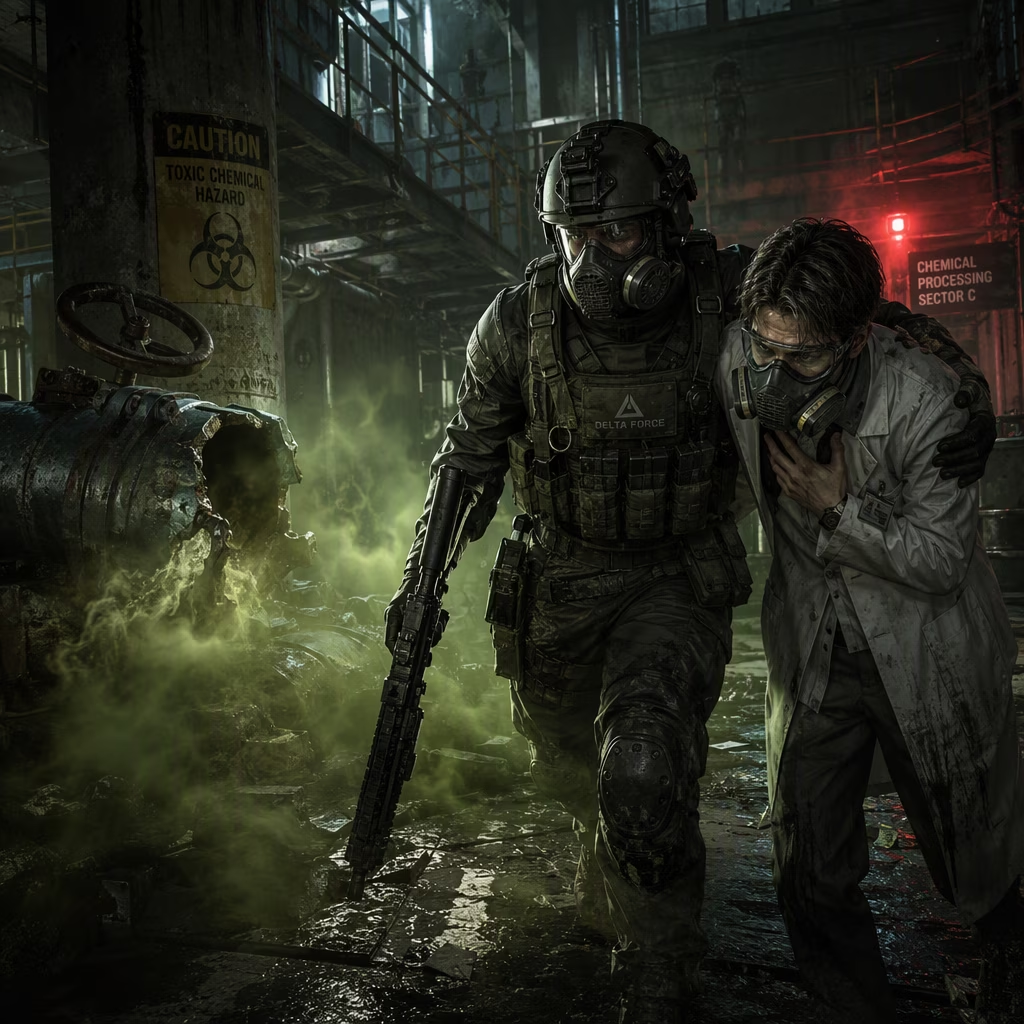
I was drawn to the same thing that pulled in so many other players: Delta Force was not chasing one shooter audience. It wanted both. Operations offered extraction-style tension, the kind of mode that makes every raid feel like a risk calculation. Warfare offered large-scale battles, the sort of chaos that appeals to Battlefield fans. Then there were the operators, which added a light hero-shooter flavor to an otherwise tactical, mil-sim-adjacent package. Free-to-play made the whole thing easier to try. That combination is powerful, but it is also a recipe for a very crowded first week.
What good is a free tactical shooter if the first match stutters? That was the real question hanging over the beta. Team Jade had already established nine server locations: US California and Virginia, Brazil, Germany, Finland, Saudi Arabia, Singapore, Japan, and Australia. Then, in a late social post, the developer confirmed five more: Mexico, South Korea, Thailand, Indonesia, and Hong Kong. The message was clear: operators had asked for better connections, and the team was trying to provide them before the rush.
| Server group | Locations named in the launch-window plan |
|---|---|
| Existing | US California, US Virginia, Brazil, Germany, Finland, Saudi Arabia, Singapore, Japan, Australia |
| Added | Mexico, South Korea, Thailand, Indonesia, Hong Kong |
That table may look dry, but to me it was one of the most important stories around the beta. A shooter can have great guns, smart modes, and a generous price tag, but connection quality shapes the first impression. If players in Mexico, South Korea, Thailand, Indonesia, or Hong Kong had been left to fight through bad ping while watching streamers play smoothly, the launch conversation would have turned sour fast. The extra servers were not a cosmetic patch. They were a bet that a global audience would show up.
And there was reason to expect one. In the August alpha test and the October demo period, Delta Force had already put up decent numbers. The October demo reached a peak concurrent player count on Steam of just under 40,000. I fully expected that number to be surpassed during the first days of the open beta. Why? Because the game was speaking to two different parts of the FPS community at once. Extraction shooter fans had Operations. Large-scale battle fans had Warfare. Both groups had been waiting for something new, and free-to-play lowered the barrier to entry.
The timing was both a gift and a problem. The beta arrived in a busy week for new PC games, including Marvel Rivals, another highly anticipated free-to-play competitor. Yes, Marvel Rivals was a third-person superhero shooter, so it was not a direct genre match. But it was still free, still multiplayer, and still hungry for the attention of competitive players. Add Path of Exile 2 to the same window, and the release calendar looked crowded. Delta Force had to compete for time, not just for downloads. Would players bounce between all three, or would they commit to one? That was the uncomfortable question.
Team Jade also made several last-minute announcements that shaped how I viewed the beta. The team said Operations mode would have Escape From Tarkov-style wipes, but that those wipes would be completely optional. That was a smart compromise. It kept the extraction mode’s sense of progression and reset without forcing every player into the same hardcore rhythm. The developer also talked about its commitment to catching cheaters within 24 hours. In a free-to-play shooter, that promise matters almost as much as server stability. Cheating can poison a launch faster than a bad map rotation.
🎯 I also kept a short list of Season 1 content and operator picks handy, because a beta launch is always easier to follow when you know what the game is actually offering beyond the first firefight. 🌍 The regional server expansion told me Team Jade was thinking globally. ⚠️ The anti-cheat promise told me the team knew that trust is fragile.
Looking back from 2026, I think the Delta Force open beta was a useful case study in launch preparation. It showed a developer trying to solve the boring problems before the exciting ones: servers, cheaters, wipes, and regional access. It also showed how crowded the free-to-play shooter space had become. A game could be top-five on Steam wishlists, offer two strong modes, and still have to fight for attention in a single busy week.
So what did I take away? Simple: hype gets players to the door, but connection quality, fair play, and clear rules keep them inside. Delta Force had the hype. The extra servers in Mexico, South Korea, Thailand, Indonesia, and Hong Kong were a sign that Team Jade understood the stakes. In 2026, with the beta long behind us, that launch-window scramble still feels like the moment the game had to prove it could handle the crowd it had invited.
When I look back from 2026 at the Delta Force open beta, I don’t see just another free-to-play shooter. I see a launch-window stress test: a game with two audiences, a huge wishlist, and a server plan that had to be rebuilt at the last minute. The open beta was set to go live on Steam on Wednesday, December 4, with no end date attached. That detail mattered. It made the beta feel less like a short demo and more like an early-access period for a tactical shooter that already sat in Steam’s top five most-wishlisted games at the time. Was it any wonder Team Jade was preparing for a crowd?
I was drawn to the same thing that pulled in so many other players: Delta Force was not chasing one shooter audience. It wanted both. Operations offered extraction-style tension, the kind of mode that makes every raid feel like a risk calculation. Warfare offered large-scale battles, the sort of chaos that appeals to Battlefield fans. Then there were the operators, which added a light hero-shooter flavor to an otherwise tactical, mil-sim-adjacent package. Free-to-play made the whole thing easier to try. That combination is powerful, but it is also a recipe for a very crowded first week.
What good is a free tactical shooter if the first match stutters? That was the real question hanging over the beta. Team Jade had already established nine server locations: US California and Virginia, Brazil, Germany, Finland, Saudi Arabia, Singapore, Japan, and Australia. Then, in a late social post, the developer confirmed five more: Mexico, South Korea, Thailand, Indonesia, and Hong Kong. The message was clear: operators had asked for better connections, and the team was trying to provide them before the rush.
| Server group | Locations named in the launch-window plan |
|---|---|
| Existing | US California, US Virginia, Brazil, Germany, Finland, Saudi Arabia, Singapore, Japan, Australia |
| Added | Mexico, South Korea, Thailand, Indonesia, Hong Kong |
That table may look dry, but to me it was one of the most important stories around the beta. A shooter can have great guns, smart modes, and a generous price tag, but connection quality shapes the first impression. If players in Mexico, South Korea, Thailand, Indonesia, or Hong Kong had been left to fight through bad ping while watching streamers play smoothly, the launch conversation would have turned sour fast. The extra servers were not a cosmetic patch. They were a bet that a global audience would show up.
And there was reason to expect one. In the August alpha test and the October demo period, Delta Force had already put up decent numbers. The October demo reached a peak concurrent player count on Steam of just under 40,000. I fully expected that number to be surpassed during the first days of the open beta. Why? Because the game was speaking to two different parts of the FPS community at once. Extraction shooter fans had Operations. Large-scale battle fans had Warfare. Both groups had been waiting for something new, and free-to-play lowered the barrier to entry.
The timing was both a gift and a problem. The beta arrived in a busy week for new PC games, including Marvel Rivals, another highly anticipated free-to-play competitor. Yes, Marvel Rivals was a third-person superhero shooter, so it was not a direct genre match. But it was still free, still multiplayer, and still hungry for the attention of competitive players. Add Path of Exile 2 to the same window, and the release calendar looked crowded. Delta Force had to compete for time, not just for downloads. Would players bounce between all three, or would they commit to one? That was the uncomfortable question.
Team Jade also made several last-minute announcements that shaped how I viewed the beta. The team said Operations mode would have Escape From Tarkov-style wipes, but that those wipes would be completely optional. That was a smart compromise. It kept the extraction mode’s sense of progression and reset without forcing every player into the same hardcore rhythm. The developer also talked about its commitment to catching cheaters within 24 hours. In a free-to-play shooter, that promise matters almost as much as server stability. Cheating can poison a launch faster than a bad map rotation.
🎯 I also kept a short list of Season 1 content and operator picks handy, because a beta launch is always easier to follow when you know what the game is actually offering beyond the first firefight. 🌍 The regional server expansion told me Team Jade was thinking globally. ⚠️ The anti-cheat promise told me the team knew that trust is fragile.
Looking back from 2026, I think the Delta Force open beta was a useful case study in launch preparation. It showed a developer trying to solve the boring problems before the exciting ones: servers, cheaters, wipes, and regional access. It also showed how crowded the free-to-play shooter space had become. A game could be top-five on Steam wishlists, offer two strong modes, and still have to fight for attention in a single busy week.
So what did I take away? Simple: hype gets players to the door, but connection quality, fair play, and clear rules keep them inside. Delta Force had the hype. The extra servers in Mexico, South Korea, Thailand, Indonesia, and Hong Kong were a sign that Team Jade understood the stakes. In 2026, with the beta long behind us, that launch-window scramble still feels like the moment the game had to prove it could handle the crowd it had invited.