
From Rookie to Survivor: Mastering Delta Force’s Operations Mode
Master Delta Force Hazard Operations through smart gear and stealth—learn how proper loadouts ensure survival in extraction raids.
The dim glow of the pre-deployment screen flickered across Ethan’s face as he stared at his empty inventory slots. It was early 2026, and Delta Force’s Hazard Operations mode had just swallowed another overconfident newcomer. He clicked “Deploy” without a helmet, thinking speed would save him. Five minutes later, a single burst from an unseen AI patrol sent him back to the lobby with nothing but a bruised ego. That first wipe taught him a lesson no tutorial could: in Operations, preparation isn’t a suggestion—it’s a lifeline.
🎒 The Right Gear Saves Lives
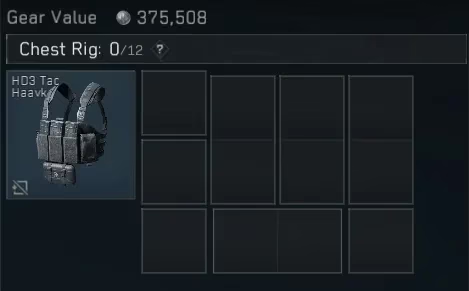
Ethan’s second run began in the staging area, where he finally read the fine print. The game wouldn’t even let him deploy without core gear—helmet, body armor, backpack, and the all-important chest rig. The chest rig, he realized, wasn’t just for looks; it gave him quick access to healing injectors and spare magazines when a firefight turned frantic. He loaded two slots with medical kits and bandages, remembering that health didn’t regenerate on its own. A mistake he’d never repeat.
Ammunition became his next headache. His first attempt to grab “whatever fits” ended with a rifle and a pistol that used completely different calibers. During a chaotic extraction, he fumbled a reload and died. After that, he started pairing weapons that shared ammo—a 9mm SMG with a matching pistol, for example. It simplified his loadout and meant less panic in the middle of a firefight. He also learned to leave breathing room in his backpack. Overpacking on bullets left no space for the rare tech salvage his squad stumbled upon. Half his early runs ended with him staring at a bag full of cheap ammo while a teammate extracted with a million-credit artifact.
🤫 Silence Becomes a Strategy
Ethan’s next revelation arrived on a rain-soaked map called Zero Dam. He’d been sprinting across open ground, drawing every nearby squad like moths to a flame. After his fourth death in twenty minutes, he watched a random teammate named Mara move like a ghost. She crouched, stuck to indoor routes, and used a suppressed weapon that didn’t send up a visual beacon with every shot. Ethan copied her style immediately. He slapped a suppressor on his M4A1, moved from cover to cover, and only engaged when he had the drop on an enemy. Suddenly, he was the one doing the ambushing.
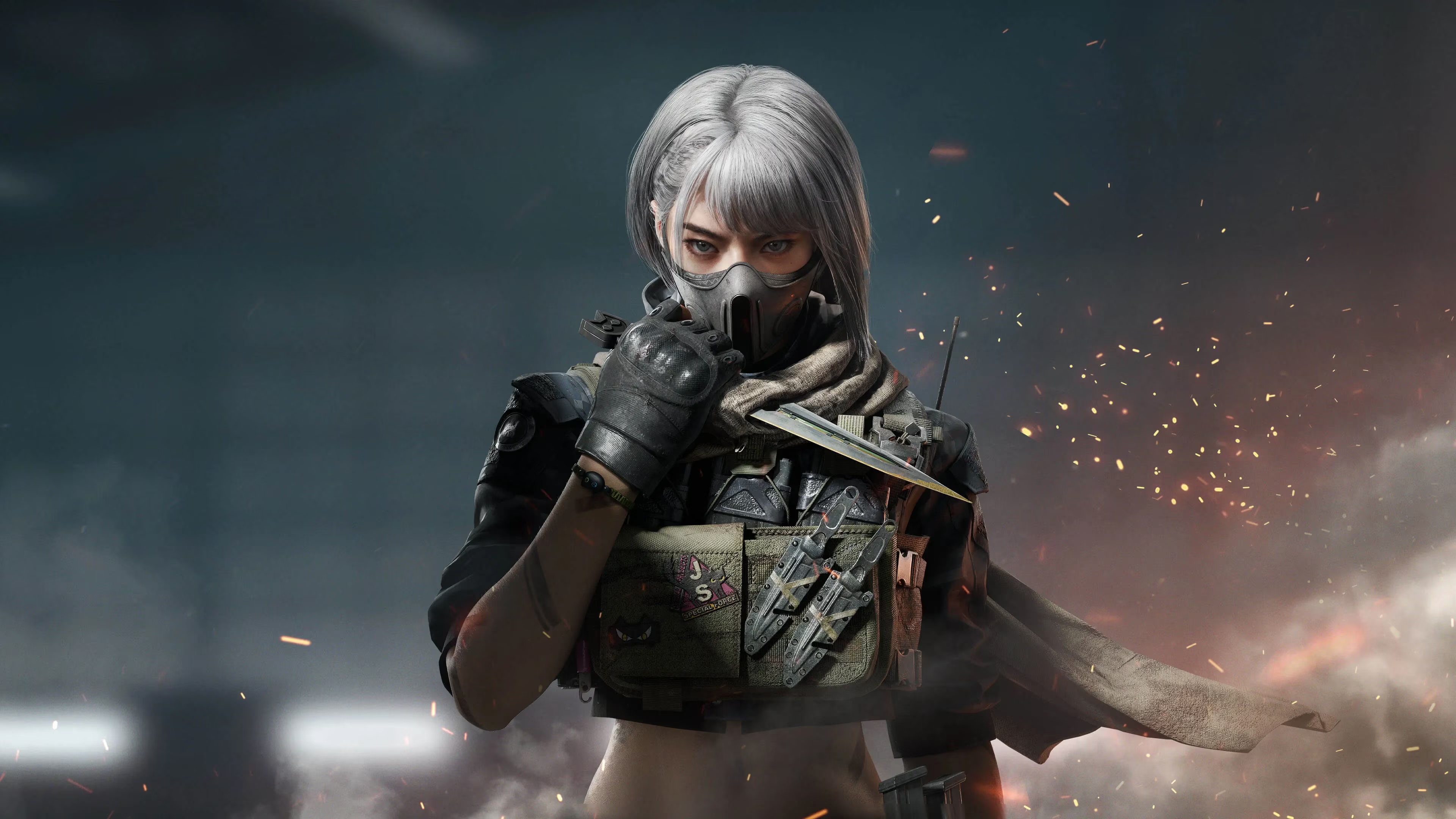
He also discovered that certain Operators amplified silence. Hackclaw’s Silent Step ability reduced footstep noise during crouched movement, letting him reposition for a flank without giving away his position. One match, he crept up a staircase undetected and eliminated a looter with a single well-placed knife throw. The thrill wasn’t in the kill—it was in the fact that nobody else on the map ever knew he was there.
🧑🤝🧑 Building the Right Squad
In the lobby, Ethan used to grab D-Wolf, drawn to the aggressive skills. But after a dozen loud raids, he understood that Operations rewarded subtlety. He began pairing with Operators like Luna, whose Detection Arrow could reveal threats through walls, and Stinger, whose healing drone and fast revives kept the squad alive during extended fights. One memorable run saw his team pinned behind a truck. Luna’s arrow lit up three enemies, Hackclaw’s silent repositioning drew their attention away, and Stinger’s smoke grenade gave them a window to retreat. They escaped with barely a scratch—and a full safe box of loot.
Even when playing with randoms, Ethan stuck close to his squad. He mirrored their movements, covered their reloads, and combined abilities. A balanced team, he learned, could survive where four lone wolves would fall.
🔒 The Safe Box: Your Little Goldmine
Every player starts with a tiny Safe Box, barely holding two slots. Ethan ignored it at first, tossing cheap meds inside. Then he died holding a rare microprocessor worth 200k credits. The item vanished—everything on his body was lost. From that moment, his entire early-game strategy shifted. He’d push toward loot-dense areas, fill his Safe Box with high-value items like golden stems or prototype gadgets, and only then worry about extraction. Even a squad wipe left him with tens of thousands of credits in that secure pocket. Upgrading his Safe Box became a priority; a larger box meant more guaranteed profit per raid. Over time, those small, protected hauls funded better ammo, weapon attachments, and bigger backpacks.
⚔️ PvP with a Plan
Ethan used to chase every gunshot he heard. That landed him in more ambushes than he could count. He slowly adopted a survival-first mindset: PvP should never be the default choice. Every bullet fired was a flare gun to other squads. Now, when he heard distant combat, he noted the direction and moved the other way. If a fight was unavoidable, he made every shot count, switching angles, never peeking the same corner twice, and leaning on Operator abilities. Luna’s shock arrows disoriented a shield-bearing squad, while Stinger’s smokes provided emergency visual cover.
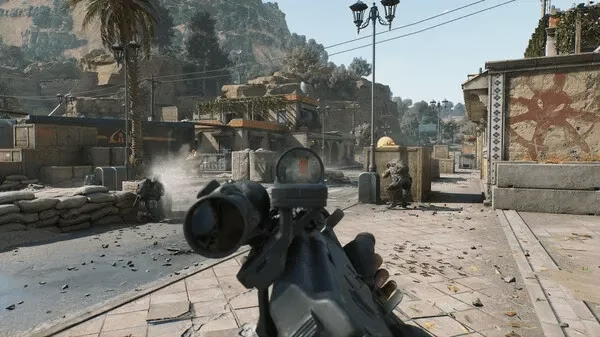
He also dedicated time at the Firing Range to master his weapon’s recoil. Consistency built confidence. He stopped switching guns every run and stuck with one reliable loadout until its behavior became muscle memory. That familiarity paid off in high-stakes extractions, where a split-second headshot meant the difference between a full haul and a body bag.
🔁 The Long Road to Mastery
Ethan’s journey wasn’t linear. He still made mistakes—rushing a solo flank, forgetting to heal, accidentally grenading his own feet. But he embraced each failure as a data point. He learned not to go solo, as Operations was brutally punishing for lone wolves. He avoided tunnel vision on PvP and focused on looting first. He stopped weapon hopping and let his gear serve him, not the other way around. He started collecting small items just to stuff his Safe Box, banking value even on doomed runs. Those incremental profits funded better meds, premium ammo, and the occasional gear upgrade.
Months later, Ethan found himself leading random squads with quiet confidence. He’d mark high-tier loot, drop meds for injured teammates, and pick extractions that avoided common camp spots. The mode that once seemed like a merciless meat grinder had become a puzzle he could solve. Every raid, wipe or win, tightened his grip on survival.
In Operations mode, there’s no fast track, only the slow, satisfying climb from rookie to survivor. Stay patient, play for the long haul, and let every mistake teach you something. The loot is just a bonus—the real reward is the skill you build along the way.
The dim glow of the pre-deployment screen flickered across Ethan’s face as he stared at his empty inventory slots. It was early 2026, and Delta Force’s Hazard Operations mode had just swallowed another overconfident newcomer. He clicked “Deploy” without a helmet, thinking speed would save him. Five minutes later, a single burst from an unseen AI patrol sent him back to the lobby with nothing but a bruised ego. That first wipe taught him a lesson no tutorial could: in Operations, preparation isn’t a suggestion—it’s a lifeline.
🎒 The Right Gear Saves Lives
Ethan’s second run began in the staging area, where he finally read the fine print. The game wouldn’t even let him deploy without core gear—helmet, body armor, backpack, and the all-important chest rig. The chest rig, he realized, wasn’t just for looks; it gave him quick access to healing injectors and spare magazines when a firefight turned frantic. He loaded two slots with medical kits and bandages, remembering that health didn’t regenerate on its own. A mistake he’d never repeat.
Ammunition became his next headache. His first attempt to grab “whatever fits” ended with a rifle and a pistol that used completely different calibers. During a chaotic extraction, he fumbled a reload and died. After that, he started pairing weapons that shared ammo—a 9mm SMG with a matching pistol, for example. It simplified his loadout and meant less panic in the middle of a firefight. He also learned to leave breathing room in his backpack. Overpacking on bullets left no space for the rare tech salvage his squad stumbled upon. Half his early runs ended with him staring at a bag full of cheap ammo while a teammate extracted with a million-credit artifact.
🤫 Silence Becomes a Strategy
Ethan’s next revelation arrived on a rain-soaked map called Zero Dam. He’d been sprinting across open ground, drawing every nearby squad like moths to a flame. After his fourth death in twenty minutes, he watched a random teammate named Mara move like a ghost. She crouched, stuck to indoor routes, and used a suppressed weapon that didn’t send up a visual beacon with every shot. Ethan copied her style immediately. He slapped a suppressor on his M4A1, moved from cover to cover, and only engaged when he had the drop on an enemy. Suddenly, he was the one doing the ambushing.
He also discovered that certain Operators amplified silence. Hackclaw’s Silent Step ability reduced footstep noise during crouched movement, letting him reposition for a flank without giving away his position. One match, he crept up a staircase undetected and eliminated a looter with a single well-placed knife throw. The thrill wasn’t in the kill—it was in the fact that nobody else on the map ever knew he was there.
🧑🤝🧑 Building the Right Squad
In the lobby, Ethan used to grab D-Wolf, drawn to the aggressive skills. But after a dozen loud raids, he understood that Operations rewarded subtlety. He began pairing with Operators like Luna, whose Detection Arrow could reveal threats through walls, and Stinger, whose healing drone and fast revives kept the squad alive during extended fights. One memorable run saw his team pinned behind a truck. Luna’s arrow lit up three enemies, Hackclaw’s silent repositioning drew their attention away, and Stinger’s smoke grenade gave them a window to retreat. They escaped with barely a scratch—and a full safe box of loot.
Even when playing with randoms, Ethan stuck close to his squad. He mirrored their movements, covered their reloads, and combined abilities. A balanced team, he learned, could survive where four lone wolves would fall.
🔒 The Safe Box: Your Little Goldmine
Every player starts with a tiny Safe Box, barely holding two slots. Ethan ignored it at first, tossing cheap meds inside. Then he died holding a rare microprocessor worth 200k credits. The item vanished—everything on his body was lost. From that moment, his entire early-game strategy shifted. He’d push toward loot-dense areas, fill his Safe Box with high-value items like golden stems or prototype gadgets, and only then worry about extraction. Even a squad wipe left him with tens of thousands of credits in that secure pocket. Upgrading his Safe Box became a priority; a larger box meant more guaranteed profit per raid. Over time, those small, protected hauls funded better ammo, weapon attachments, and bigger backpacks.
⚔️ PvP with a Plan
Ethan used to chase every gunshot he heard. That landed him in more ambushes than he could count. He slowly adopted a survival-first mindset: PvP should never be the default choice. Every bullet fired was a flare gun to other squads. Now, when he heard distant combat, he noted the direction and moved the other way. If a fight was unavoidable, he made every shot count, switching angles, never peeking the same corner twice, and leaning on Operator abilities. Luna’s shock arrows disoriented a shield-bearing squad, while Stinger’s smokes provided emergency visual cover.
He also dedicated time at the Firing Range to master his weapon’s recoil. Consistency built confidence. He stopped switching guns every run and stuck with one reliable loadout until its behavior became muscle memory. That familiarity paid off in high-stakes extractions, where a split-second headshot meant the difference between a full haul and a body bag.
🔁 The Long Road to Mastery
Ethan’s journey wasn’t linear. He still made mistakes—rushing a solo flank, forgetting to heal, accidentally grenading his own feet. But he embraced each failure as a data point. He learned not to go solo, as Operations was brutally punishing for lone wolves. He avoided tunnel vision on PvP and focused on looting first. He stopped weapon hopping and let his gear serve him, not the other way around. He started collecting small items just to stuff his Safe Box, banking value even on doomed runs. Those incremental profits funded better meds, premium ammo, and the occasional gear upgrade.
Months later, Ethan found himself leading random squads with quiet confidence. He’d mark high-tier loot, drop meds for injured teammates, and pick extractions that avoided common camp spots. The mode that once seemed like a merciless meat grinder had become a puzzle he could solve. Every raid, wipe or win, tightened his grip on survival.
In Operations mode, there’s no fast track, only the slow, satisfying climb from rookie to survivor. Stay patient, play for the long haul, and let every mistake teach you something. The loot is just a bonus—the real reward is the skill you build along the way.